Authenticity in art - Renaissance and Michelangelo’s genius
Comment - Eduard Teodorescu
The world that we know today would probably look very different without the Renaissance and its masterful artists. Michelangelo Buonarroti and his predecessors rejuvenated sensibility, evoking myths and allusions to religion or the creation of the world. My whole life, art was not something I simply observed from afar, but something I encountered across museums, cathedrals, and city streets throughout Europe. Nowhere did it feel more alive than in Italy, where the legacy of the Renaissance continues to shape cultural identity and celebrations of the self.
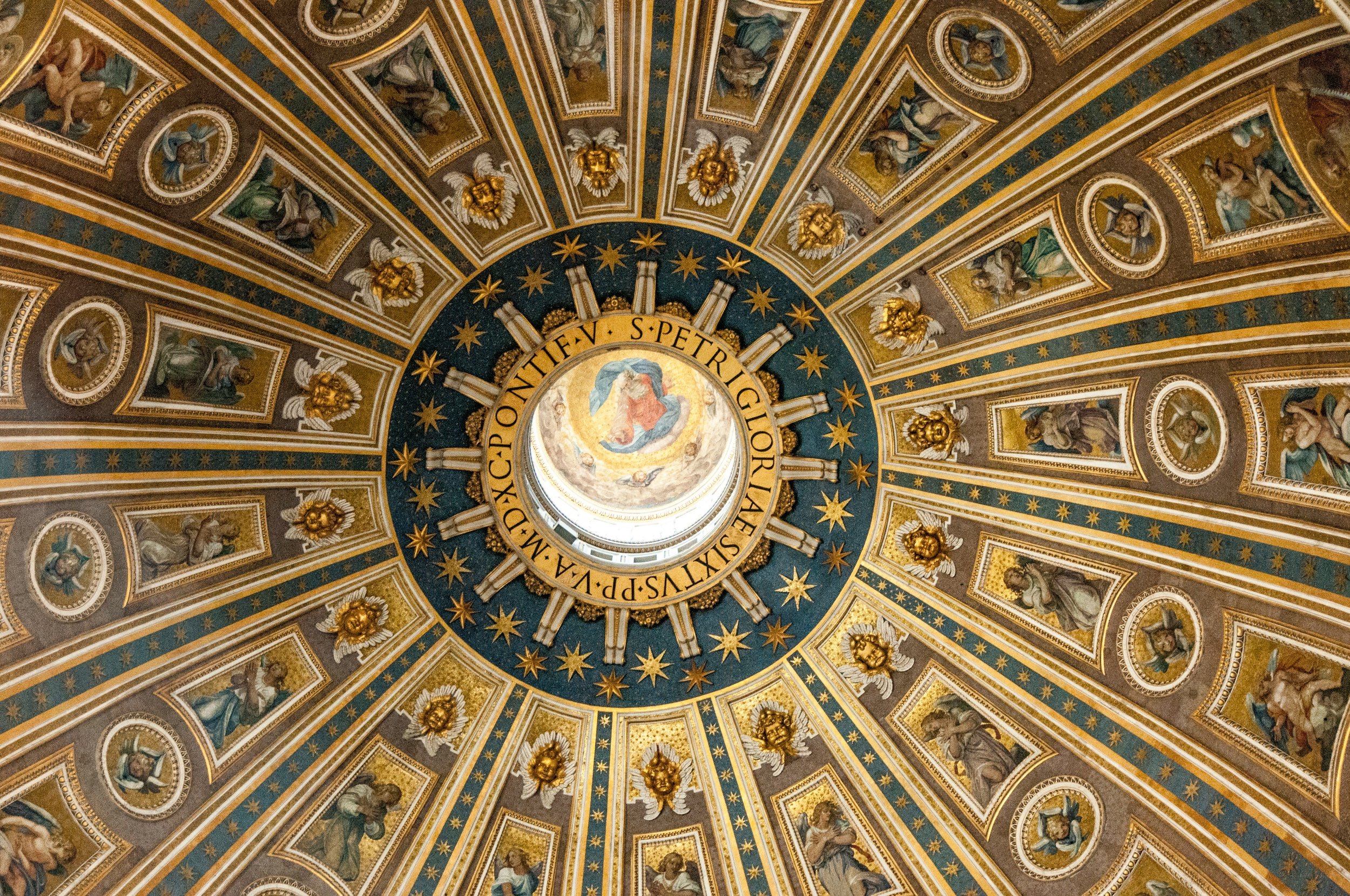
Photo: Fernando Mola-Davis on Unsplash
Imagination and creativity have always been valuable skills for development. From antiquity, we can see comprehensive spaces, where organizational spaces within societies combine business with pleasure. Each of them combine functional designs with a passion for beauty, merging various symbols from nature or cultures. The Renaissance masterpieces bring back the notion of Art in “Craft”, or as the Italians say: “Artigianato”.
Italian culture and artistry have always had a special place in my heart, I have been grateful to encounter and be amazed by the masterpieces of Michelangelo. Italian society of the 15th century was going through an intense reform, where knowledge for the people stood in the center and where suddenly paintings became philosophy through form. Thus, he borrowed Donatello’s technique of schiacciato where perspective, is embodied to perfection, by carefully carving human figures. Light and volume are ordering the space in a harmonious tapestry of woven techniques.
Photo: Eduard Teodorescu / PRESSET.
Masters like Michelangelo did not merely produce beauty: they forged a visual language through which religion, mythology, and human experience became inseparable. He revolutionized the notion of “Uomo Universale,” in which the ultimate goal of the Renaissance was to provide an ideal of humanism. More specifically, qualities and balance in intellectual distinction, physical excellence, and moral virtue were key to the cultivation of a universal human modern experience. In this sense, Italian culture is not just influenced by art, but rather defined by it, after centuries of work.
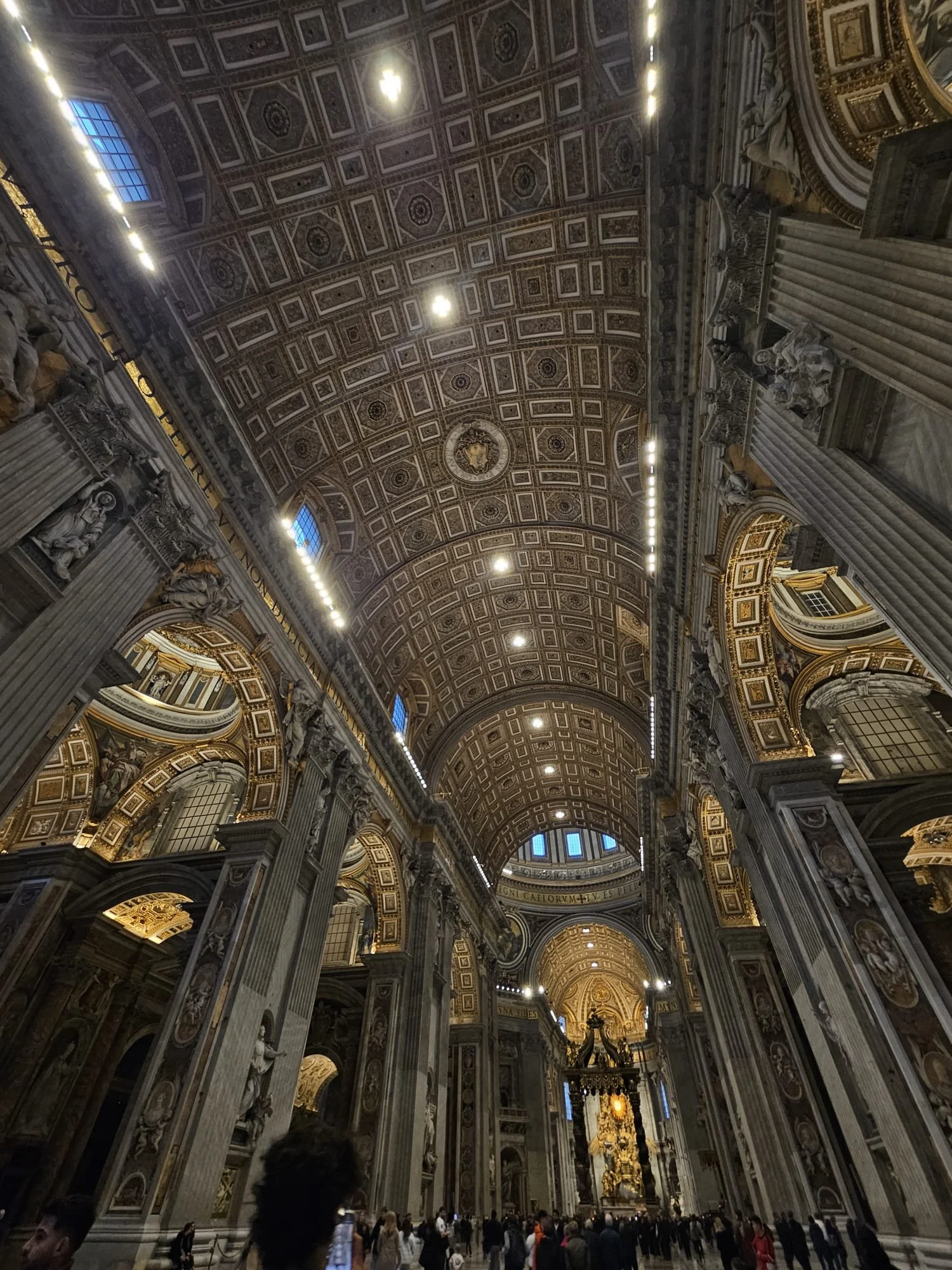
In the middle of the Vatican Square, outside the Museums, lies St. Peter’s Basilica, which hosts infathomably valuable items: secrets and cultural artifacts, blending in to tell a story of humanity, where spiritual values and heritage showcase the heart of Catholicism. After receiving recommendations, I visited both the Museums and the Sanctus place, where the ideal of beauty is met this time in sculpture, balancing early forms of naturalism with the Renaissance classical beauty ideals. On the right side of the church lies the statue of Pietà (1499), a marble sculpted with awe, depicting the Virgin Mary cradling Jesus' body after the Crucifixion. Carved with the most skillful talent, the young body of Mary captures with emotion the solemn moment of grief from a Mother, forever immortalized in time and tradition.
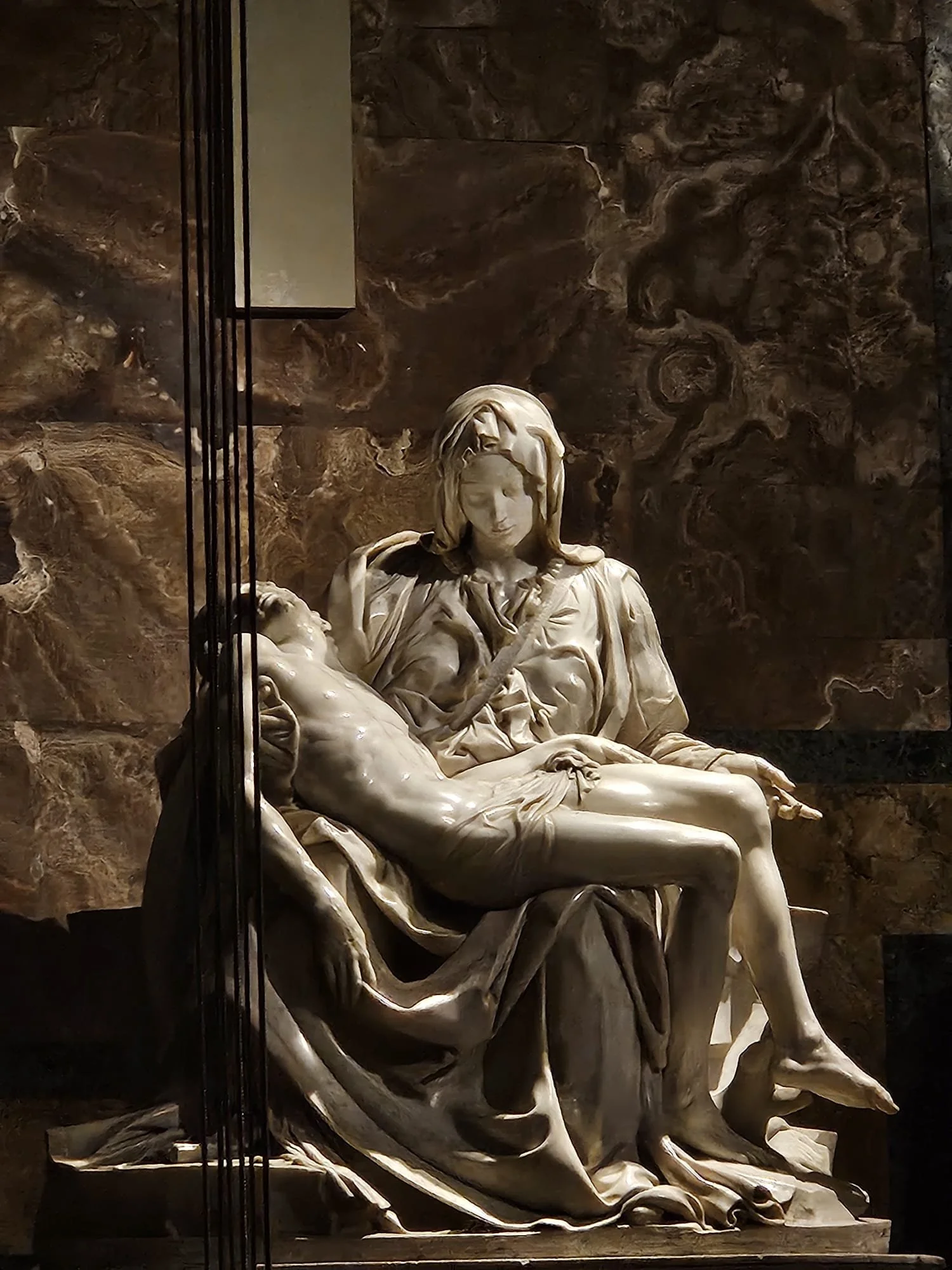
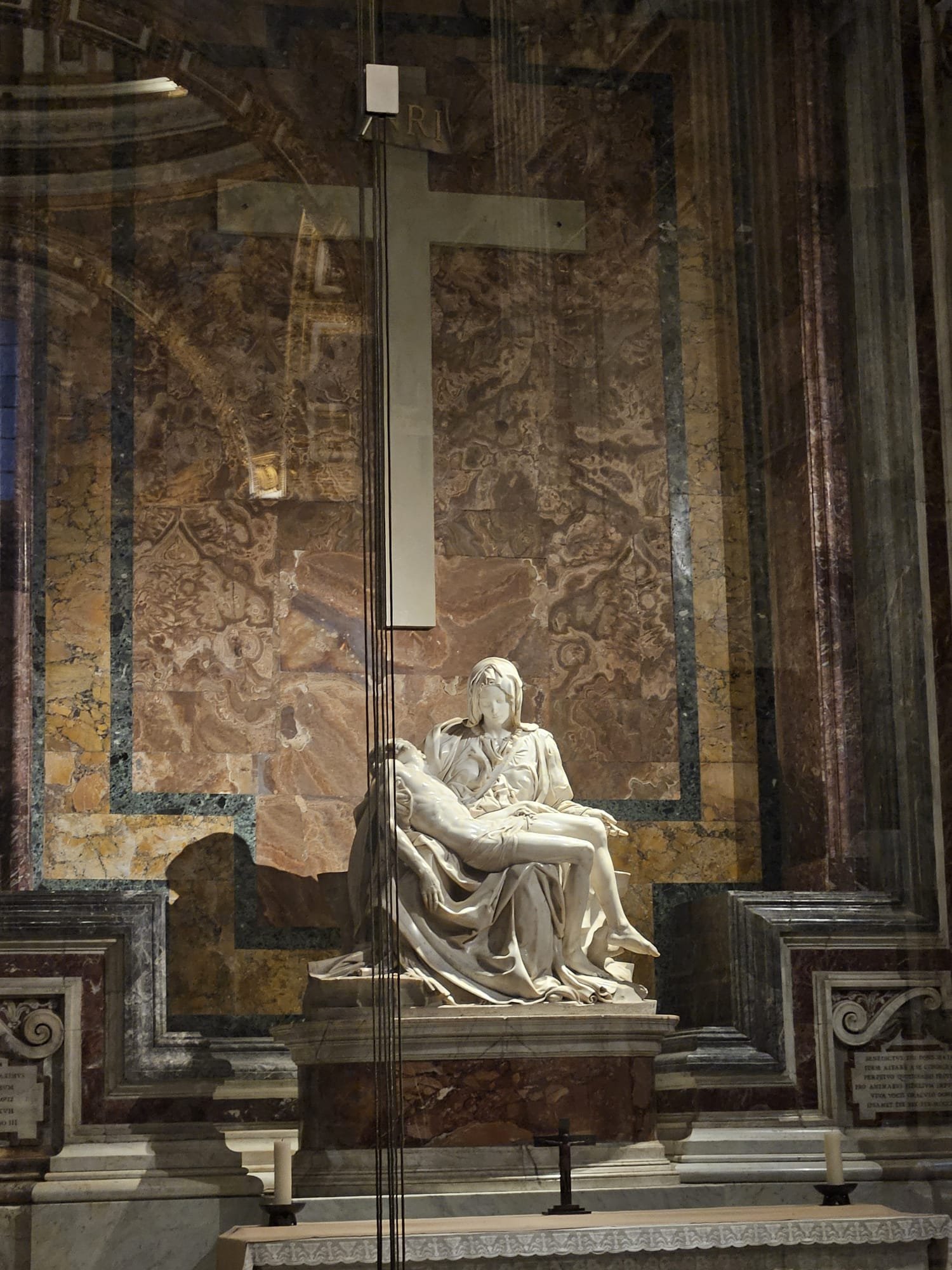
Photo: Eduard Teodorescu / PRESSET.
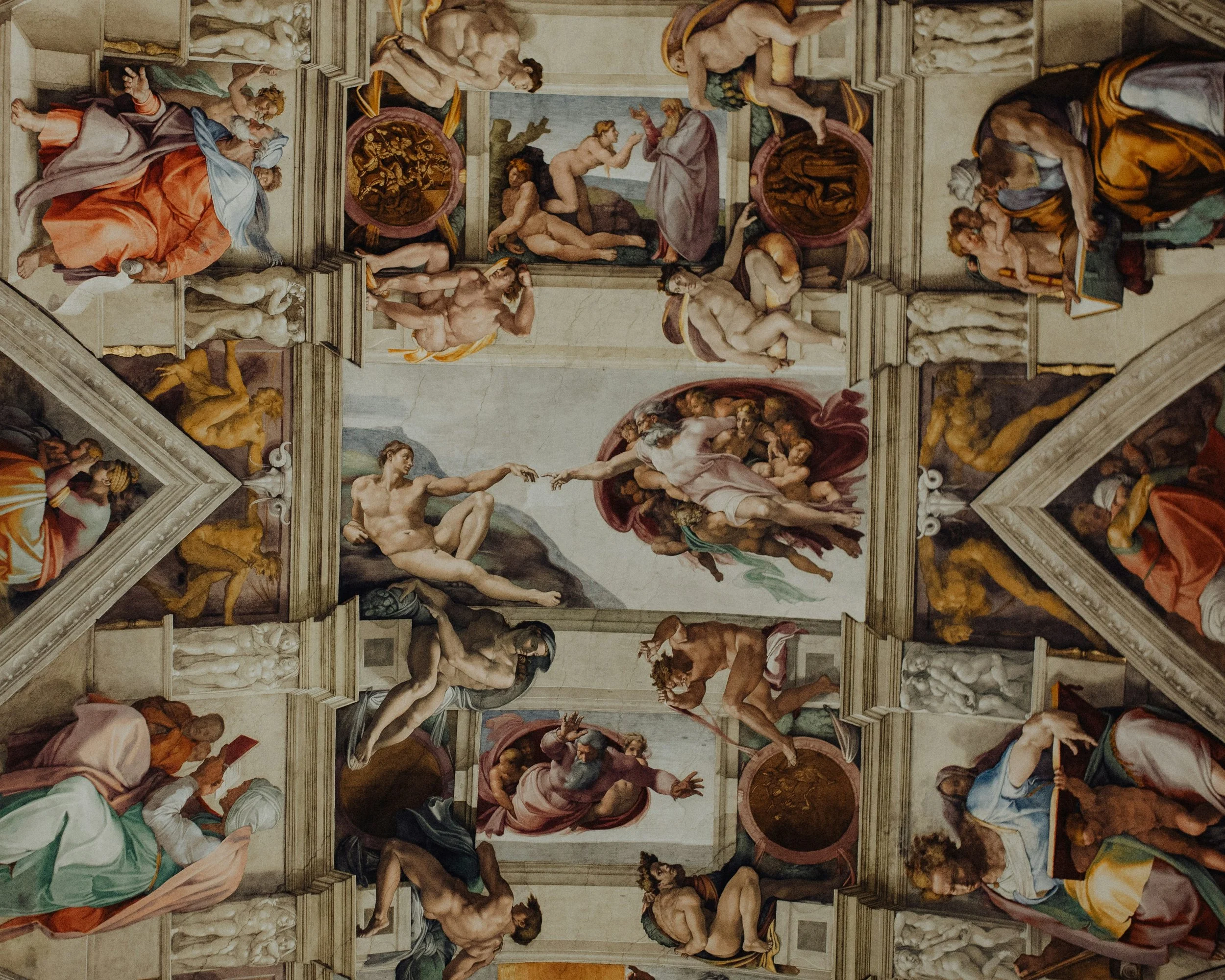
The Creation of Adam
Probably the most acclaimed art piece that he produced was by merging naturalism with idealism, which employs mathematical principles and geometry to achieve harmonious, balanced representations of the human figures, and is most associated with The Creation of Adam on the Sistine Chapel ceiling, which can be found in the Vatican Museums.
The scene portrays the Biblical creation narrative of the first man’s conception: Adam. It evokes depth and expression through idealized proportions in a fresco, which is part of a panel series depicting the episodes of Genesis, and it is estimated that it took 4 years to fully complete from 1508 to 1512.
Photo by Calvin Craig on Unsplash.
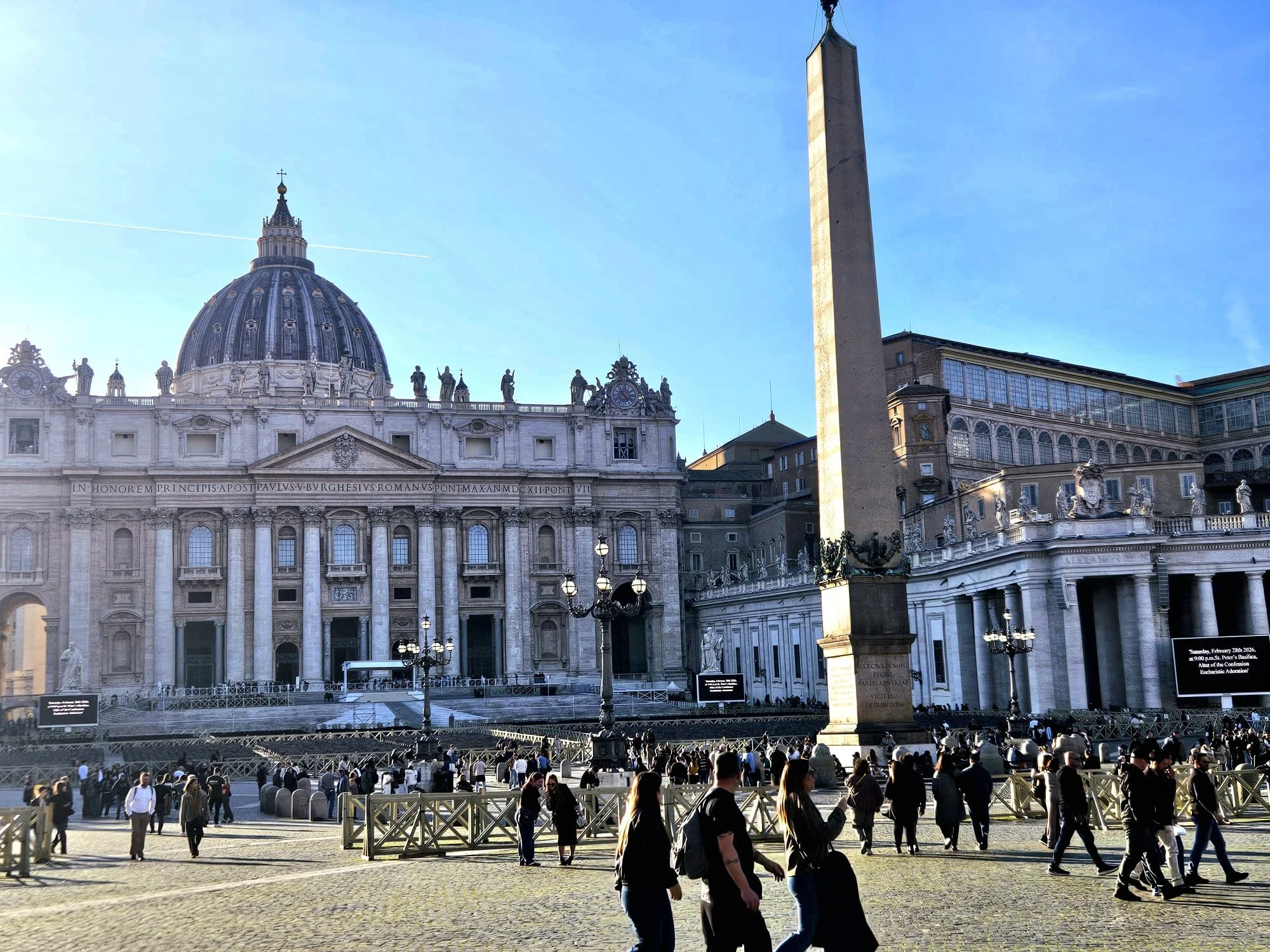
the cupola challenge
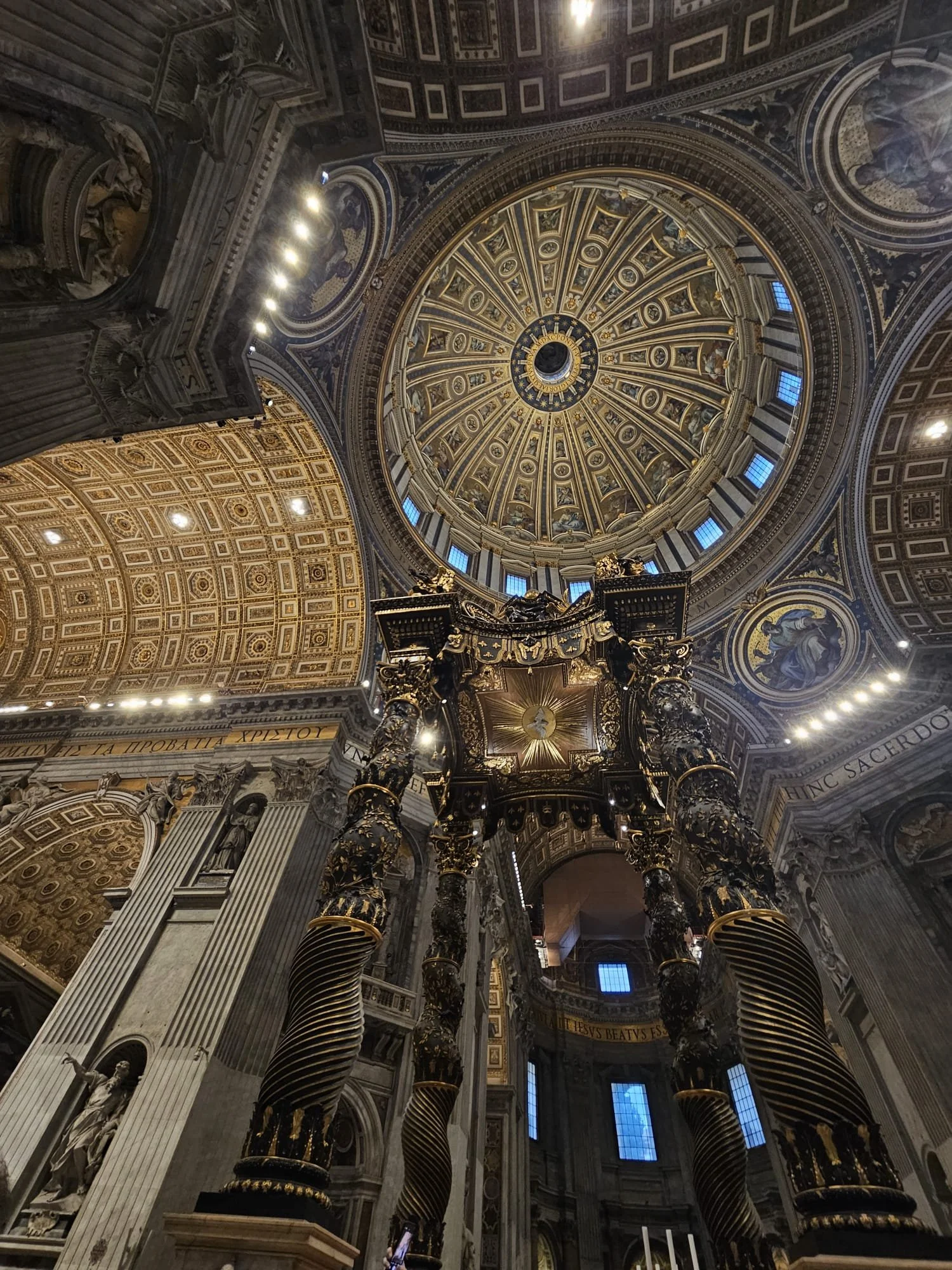
Perhaps, the most revolutionary piece of engineering that Michelangelo fixed lies in the heart of Rome. He grew up admiring Brunelleschi's dome in Florence, which innovated with a double-shell dome using a herringbone brick pattern for self-support. Furthermore, the 45m-wide, octagonal dome was placed over the massive crossing, crowning Florence's symbol.
He designed St. Peter's Dome in the Vatican at the age of 71 , adapted the double-shell idea but made his taller, circular-drum version more elegant, stable and efficient against bad weather conditions. The engineering project took 40 to 50 years and the whole project of St. Peter’s Basilica took a total of 120 years to finish completing.
Photo: Eduard Teodorescu / PRESSET.
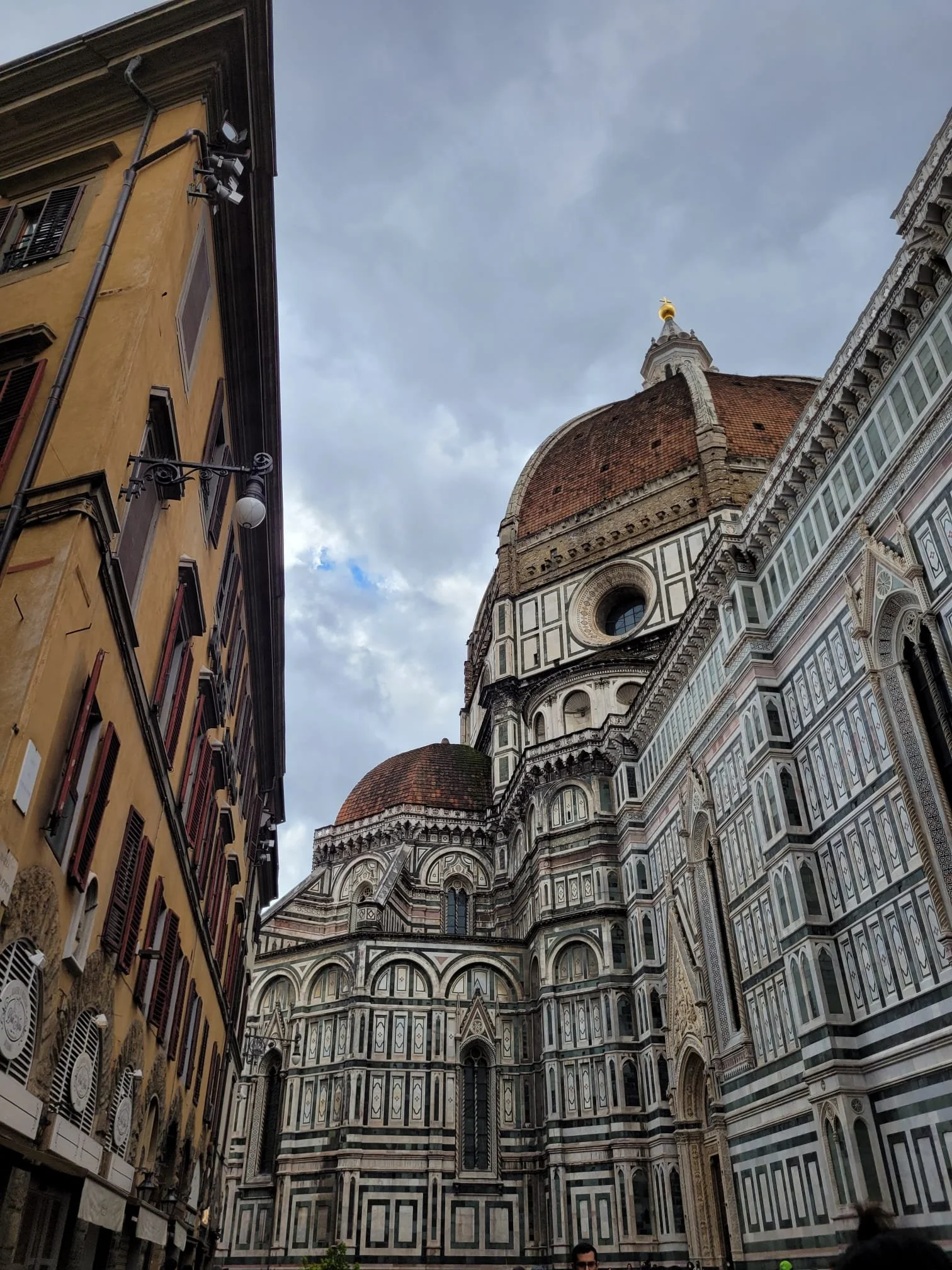
Cathedral of Santa Maria del Fiore
After a few hours’ trip to the north, we find ourselves in perhaps the most romantic city in the region of Tuscany, displaying an eternal sight of ideal beauty. Surrounded by hills where olive trees and vineyards spread as far as the eye can see, we find Florence. Here, the arts flourished under the reign of the Medici family, because there were many commissions and apprenticeships spanning centuries.
Photo: Eduard Teodorescu / PRESSET.
Academia Florentina was a philosophical and literary academy established in Florence in 1540, encompassing modern principles of humanism promoting education and language, in a mix of Platonic philosophy that combined theological values and marked the end of the Middle Ages aesthetic period.
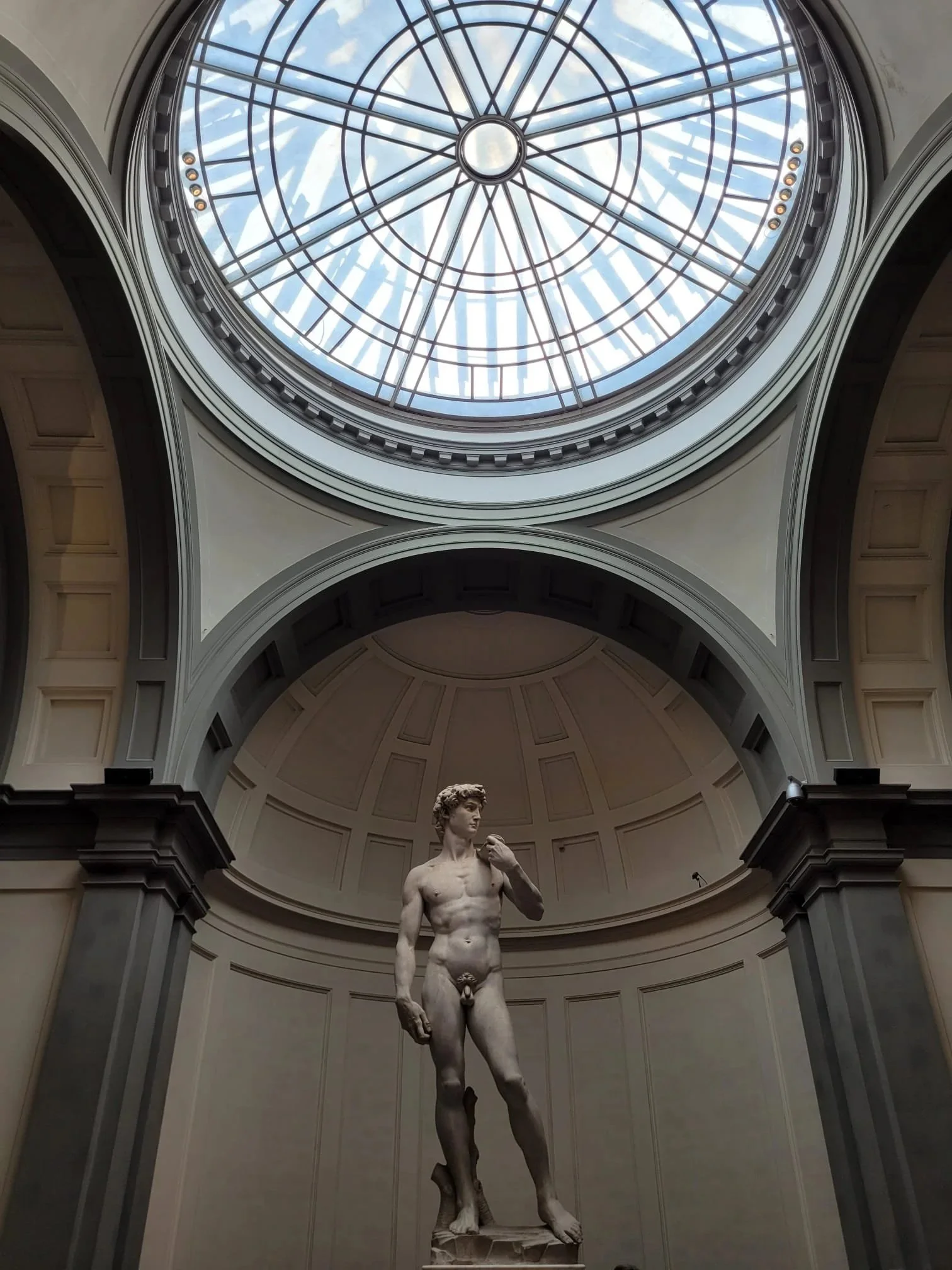
The statue of David
The statue of David from 1504 is one example of such sponsored artistry representing a monumental figure of 5.17 meters, of unprecedented detail. It is highly inspired by antiquity, but has a humanistic, almost promethean, focus on the man, rather than deities. After a period of a thousand years, the marble figure is reborn again, becoming a manifestation of the nude rebirth as a reflection of human beauty created in God's image.
Through virtuosity, artists became amateur anatomists, achieving lifelike portrayal of the human form. Innovations during this period open doors in the study of anatomy through the practices of dissection of corpses.
Photo: Eduard Teodorescu / PRESSET.
Through geniality and continuous experimentation with form after many years, he brought Battista Alberti’s beauty essence to new heights and established a legacy of art principles, which culminated in the establishment of a new institution called the Accademia di Belle Arti di Firenze (1563) under his influence. Giorgio Vasari, his disciple, was also an important theoretician of the art academy and positioned Michelangelo as the only person who surpassed the ancient artists. Since his remarkable works of perfection redefined not only the way we look at art, but also the little essential details behind a well-proportioned and highlighted figure, he deserves a high chair in the mastery of his craftsmanship. To understand authenticity in a modern Italian context is therefore to grapple with a living tradition, one that continuously negotiates between preservation and reinterpretation.