When Euphoria Turns Into Dysphoria
Review - Ananda Holte Nilsen
What goes up must come down, something Rue Bennett (Zendaya) is well acquainted with as a former drug addict and main character in Sam Levinson’s Euphoria. Quite frankly, the same can be said about the show. Season 3 of HBO’s hit show Euphoria has finally been released, four years after its second season in 2022. After a period plagued by a literal plague (COVID) and writers’ strikes, Hollywood is finally on the comeback.

Euphoria season 3 poster (2026)/ Photo: IMDb
What it’s all about:
The long break between seasons is noted in this newest release. Various actors are missing, with some dropping out and others simply not being called back for the season. Many of the other main actors were also booked and busy, resulting in further delays. To add more salt in the wound, singer and producer Labrinth, whose music was an integral part of the previous seasons, left the production with his music earlier this year. The result is a season that sets itself apart from the previous iterations.
Euphoria has always been a show that tested the limits. Originally a teen drama, the characters often found themselves in situations that most normal teens would not be in, with questionable school outfits, hard-core drugs at parties, and extreme age gaps in some of the “relationships”. The extremeness of what these teens got up to was balanced by the visuals, make-up, and music used throughout. In fact, many scenes and lines from the series have become pop-culture hits because of its aesthetic.
Season 3 brings the characters a few years forward, placing them in their 20s without much context. Rue’s voiceover tries its best to catch viewers up on everything we have missed, but most of it feels hollow and detached. Somehow, almost all the women have ended up in the sex industry, and if not that, under the control of an abusive man. None of the characters seem to match up to the way they were before, and yes, people change as they grow, but this feels more like Sam Levinson did not know how to write about female characters in their early twenties. Cassie (Sydney Sweeney) is a (failed) trad-wife for Nate (Jacob Elordi), who spent the whole first two seasons abusing the women around him. Season 3 sees him confronted by debt collectors, whom he attempts to run away from, and honestly? That’s the only character development that makes sense.
Rue finds herself involved in the drug world in a different way, first smuggling it over the border, then selling it in her boss’s nightclub. Jules (Hunter Schaffer) spends her days locked up in a penthouse painting, waiting for her sugar daddy to visit. The only two who seem to be going somewhere are Lexi (Maude Apatow), who got a job as an assistant for a famous showrunner in Hollywood, and Maddy (Alexa Demie) is also an assistant, but for an agent in the industry.
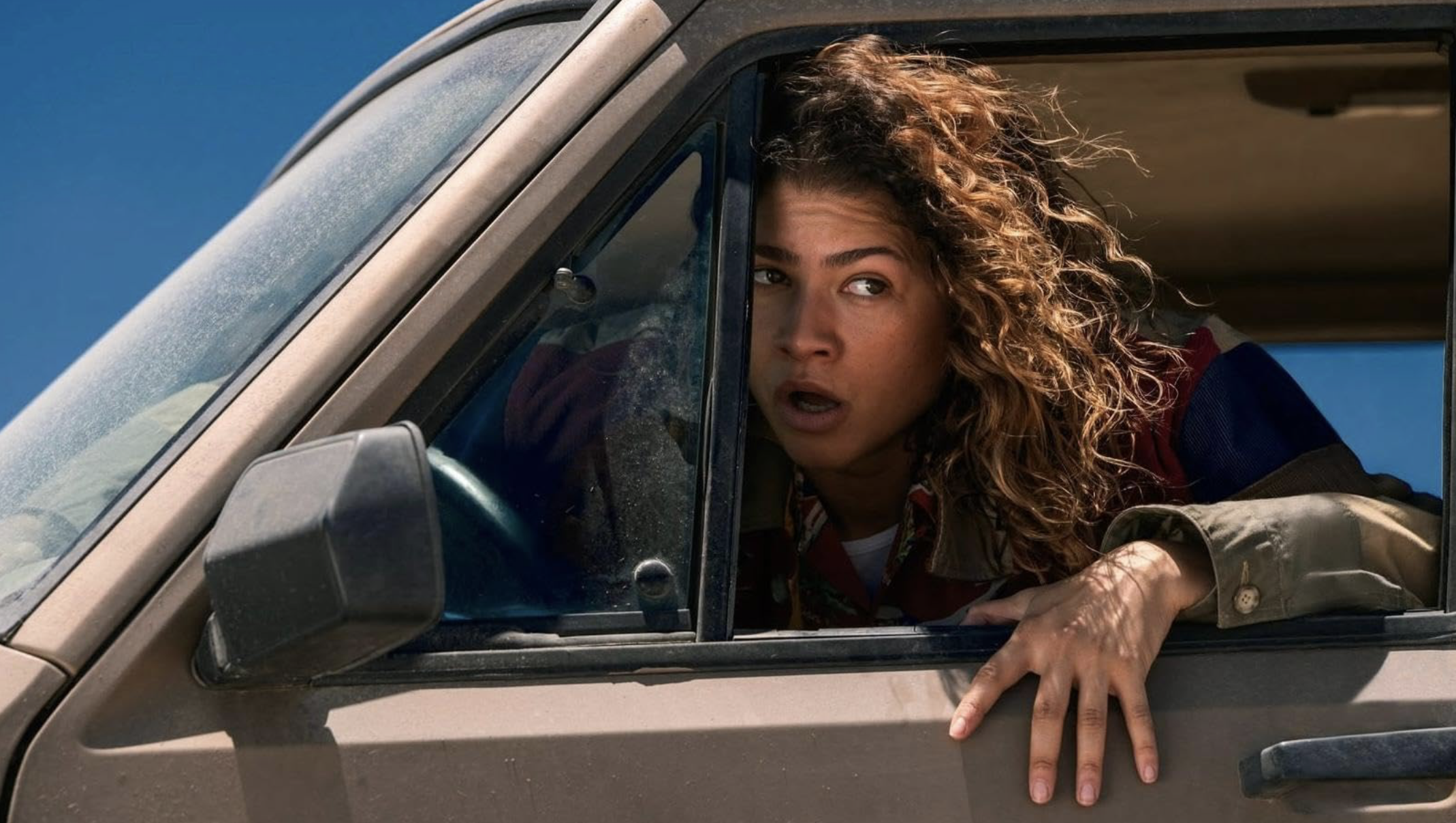
Rue Bennett (played by Zendaya). Euphoria (2026) / Photo: IMDb
Social commentary or just vibes?
The general vibe of the season is that there isn’t one. It is pretty clear that the season was written, then rewritten, and then written again. There are some hints of ‘western’ vibes as a lot of the scenes are spent out in the Californian desert, not to mention Rue’s boss, Alamo (Adewale Akinnuoye-Agbaje), is constantly decked out in cowboy gear, despite being a man who runs several strip clubs. At times, it feels like Sam Levinson tries to make some sort of social commentary: people overdosing on fentanyl, sex work, and its industry, but it all falls flat and feels very performative. In the sense that he seems to simply want to put these things on screen without any intention or other commentary.
Cassie’s version of a hero’s journey revolves around her career as an OnlyFans influencer (using the revenue to pay off Nate’s debts) with Maddy as her manager (red: pimp). In fact, as mentioned earlier, all the women are somehow involved in the sex industry because in Levinson’s world, there is only one thing a woman can be: a product sold to men. What message does this send to the women watching this show? Though I doubt many impressionable young women are watching (most have likely grown up in the wait between seasons). Are our only options in life servitude to men in one way or another? One would hope that in 2026, film and TV would have better prospects for the women on screen.
End of an Era
The season finale came and went, and with it, our protagonist, Rue, who had been the narrator throughout the whole series. Apparently, women are not allowed to live happily ever after in male fantasies, as Stranger Things, which also wrapped up this year, also chose to kill off its female lead, Eleven, in the season finale. Her passing is meant to reflect the current drug epidemic running through the US, as many users face the same issues in real life. But her end rings hollow as one reflects on her character throughout the show, driving the plot forward time and time again. When it finally seems like things will work out for her, the creators chose to throw her to the side, and her on-screen friends barely seem to mourn her - a disappointing pattern in current TV series endings.
A lot has changed since the first season of Euphoria was released in 2019. Now, seven years later, both the cast and the characters have grown up, and they all seem tired. The difference in ratings from its pilot season, with the first earning a 5/5 from NRK, a slightly lower 4/6 for season 2, and a low 3/6 for season 3, says it all. The brightest stars burn the fastest, and unfortunately, Euphoria is all out of gas.