Lipstick Lesbians and influencer authenticity
Kåseri - Stine Ellegård
From Tiktok girlbosses to Beauty entrepreneurs, Alexis Androulakis and her wife Dr. Christina Basias Androulakis recently launched their most recent venture Leaked Labs. The latest point on a long list of failed brands, dubious business practices, and unfulfilled promises. A prime example of how fast innovative and ambitious influencers can turn fishy when their authenticity is uncertain.
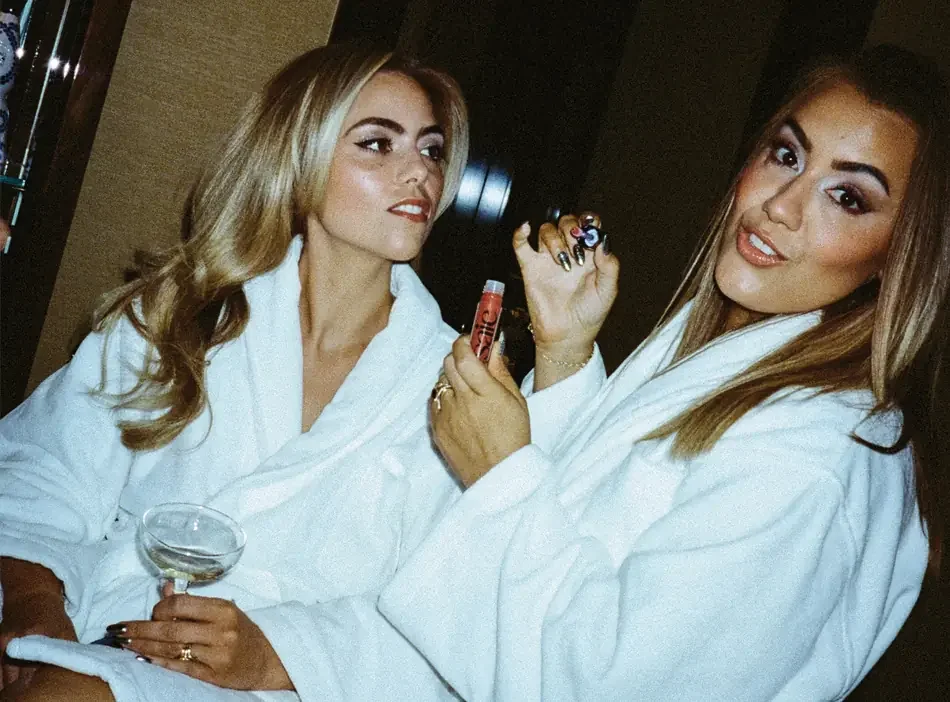
Photo: article by Vogue Adria by Kristina Mikulić Gazdović
The launch, the drama begins
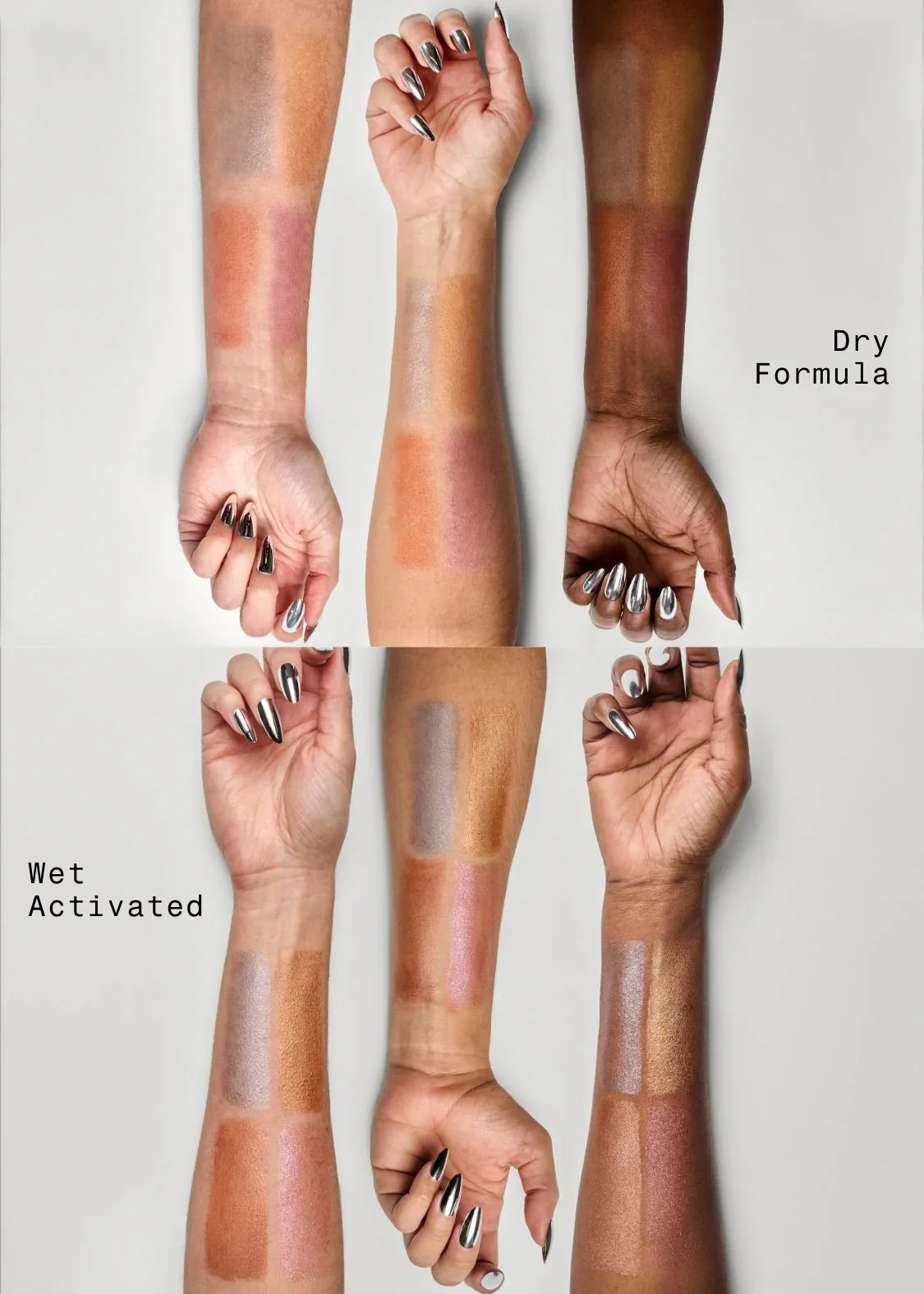
Actual swatches from the Leaked Labs website Photo: Leaked Labs
On the 27th of February the Lipstick Lesbians, a TikTok couple (Alexis and Christina) who have gained virality from their content talking about makeup, posted for the first time about their launch of their new brand: Leaked Labs. The new brand was launching with one product, a tin containing four eyeshadows, made using a “revolutionary” new formula.
Criticism and confusion came quickly. The netizens were not impressed by the first look at the product; the product looked bad, the claims of the brand were heavily disputed, and calling the formula “revolutionary” was confusing. While rubber sheets of eyeshadows weren’t necessarily “common”, there are product that have similar benefits. One example are jelly eyeshadow sticks from the Chinese makeup brand Joocyee.
The brand could boast that this new revolutionary eyeshadow was unbreakable, and could be used both dry or wet activated. While the unbreakability seem to be true, as it doesn’t shatter, this is also true for any other non-powder eyeshadow. Being able to be used both dry or wet is also true for any powder eyeshadow. The innovation seemed to be the merging of the unbreakable quality of a non-powder eyeshadow, with the versatility of a powder eyeshadow. This combination feels rather useless when the product looks lacklustre and it seems more convenient to own both powder and non-powder eyeshadows. Not to mention the product was ridiculously expensive with $34 for 2 grams of product.
Divine lipsticks
You might assume that Leaked Labs was the Lipstick Lesbians’ fist attempt at a makeup brand, but actually they already created a brand called Fempower, that released its first collection in 2019. (This brand no longer exists as they would claim that there was no demand for lipsticks as Covid-19 hit and everyone was wearing masks). The branding was all about female empowerment and innovative makeup.
The first launch from Fempower was the Genesis collection, inspired by the Book of genesis. The Lipstick Lesbians weren’t happy about the world of makeup being run by mostly men. So the idea behind the collection was to take the story of genesis and rewrite it through a matriarchal lens where Adam was the one that bit the apple. The four lipsticks launched all had biblical names and each gave a rewritten story of the characters, Adam, Eve, the Serpent and Lilith. This launch would also be used as an introduction to “affirmation application” a routine of applying makeup while saying affirmations.
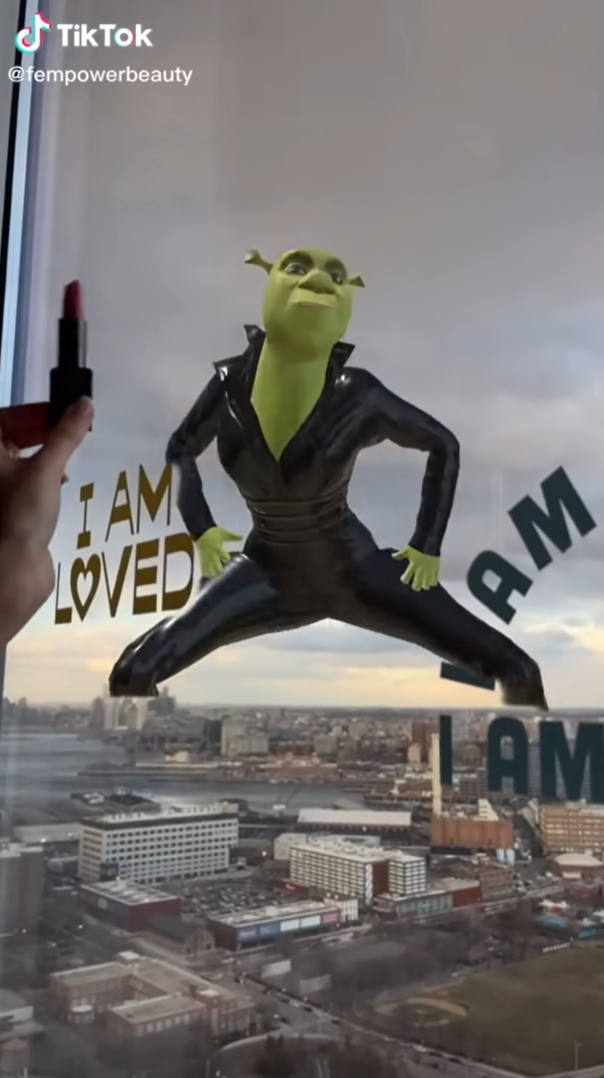
Screenshot of Fempower marketing video, now deleted. Photo: screenshot by Stine/PRESSET from video by DisgruntledTownsperson.
The feminist rewriting of the bible might have seemed a bit performative, but this was not the only issue. While they described their brand as innovative, it was difficult to see where the innovation was. The brand seemingly just released four regular bullet lipsticks. Their second launch wasn’t much better as it was a double-sided lipstick with a matt end and a gloss on the other side. The innovation being the creative writing in the product descriptions? The marketing of the product also didn’t help as their social media posts felt outdated and poorly made.
In late 2019 after the launch of the genesis lipsticks, Fempower started a crowdfunding in order to help create a new collection inspired by ancient Egypt. On the website IFundWomen there was created a Crowdfunder with a fifty thousand goal. They managed to raise eleven thousand, but no collection was ever released. The website stated that even if the campaign fails to reach its goal, the money will still be paid out, yet no information about what happened to that money was given.
Courses, of course
Another business venture, were Affirmation Applications, launched by Alexis. Affirmation application is a practise where , while you apply your makeup, you repeat affirmations and practise self love. A form of new-age spiritualism, with practises such as visualising opening your eyes while applying mascara.
The course consisted of a one-on-one session over zoom where Alexis would not only teach you how to apply your makeup, but how to do it with intension. Alexis has claimed to work as a makeup artist for many years, though this claim is disputed by commentators. While some of it is just rude comments, others are reasonable questions for a makeup artist offering a paid course on teaching makeup application. It is natural to question the expertise of a makeup artist when you find their skills lackluster. When you pay for a course from a professional makeup artist you expect their skills to be at a certain level. But the comments often point out a lack of blending, imprecise application and unflattering colours.
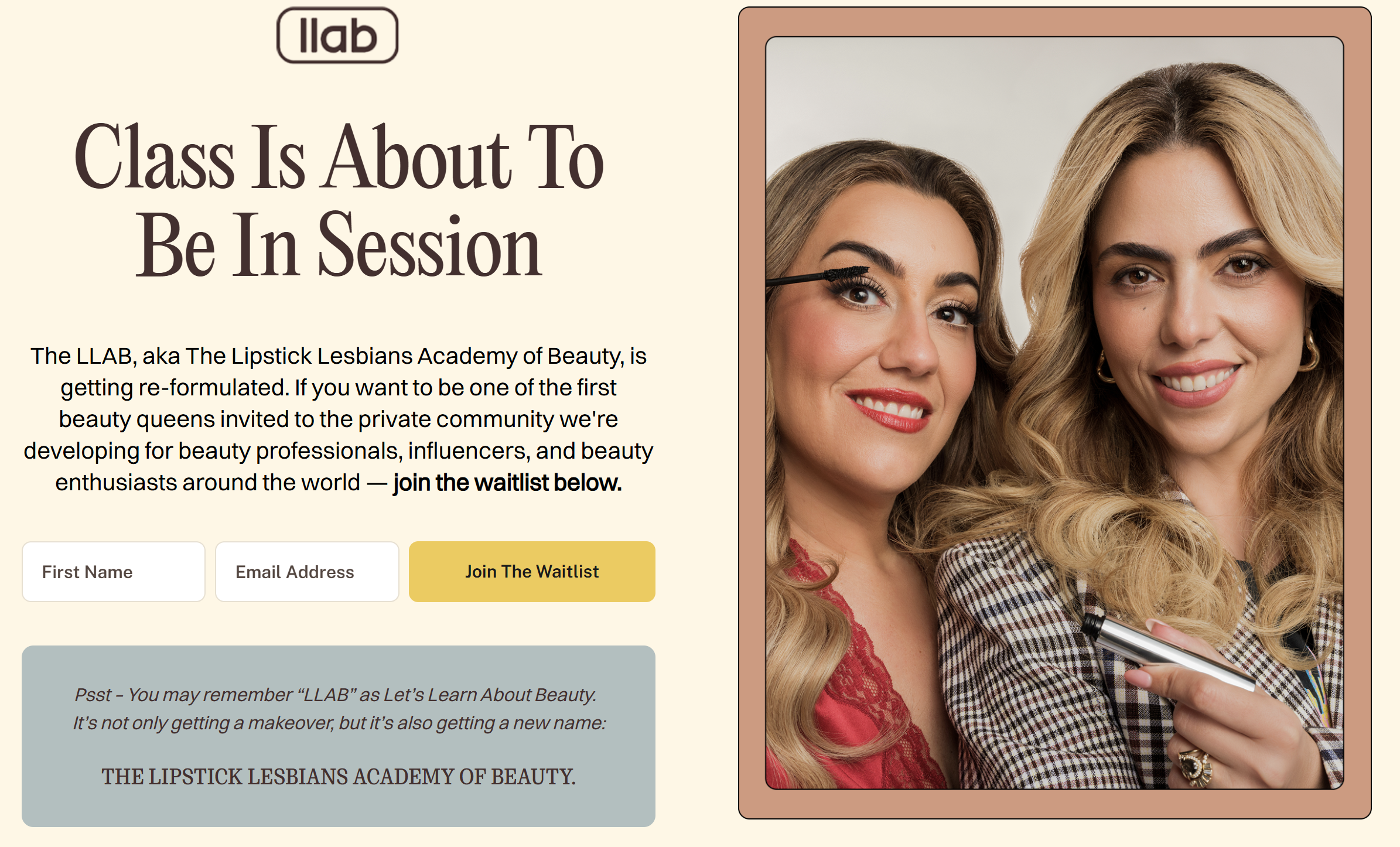
Current status of the LLAB website. Photo: screenshot by Stine/PRESSET of LLAB website
The second course, which is in a rebranding phase, is called the LLAB (Let’s Learn About Beauty). This course was supposed to serve as a masterclass in Alexis’s expertise, giving anyone the tools needed to become an entrepreneur or level up their career within the beauty space. While Alexis has had a long career working for several successful companies as a product developer and makeup artist, every business endeavour that she has tried with her partner has failed. It’s difficult to take business advise from a woman who have started; a failed makeup brand (possibly two, anytime soon); a course which no longer exists (seemingly because no one was interested) and has invested in a literal crypto scam (not because they tried to be in on the scamming, but because they genuinely thought it was a good investment).
The inauthenticity of influencer marketing and brands
One big problem with influencers is the lack of authenticity once they, rather than being a person(ality), become a brand. While the Lipstick Lesbians might have started out as a cute couple, sharing interesting facts about the beauty industry and products, they no longer seem credible. Theres is no telling which of their product reviews are authentic versus undisclosed ads, and more and more people finding them untrustworthy. Their credibility is not improved when they constantly look for ways to make money, while not delivering what they promise.
For an extremely comprehensive deep dive on the Lipstick Lesbians watch this video essay by DisgruntledTownsperson.