Parasite and Authenticity: A Representation of South-Korean Class Structures
Review - Vivien Vetriolo
Bong Joon-ho’s award-winning film “Parasite” has been acclaimed worldwide since its release in 2019. We encounter cramped basement apartments, sleek hillside villas, and the invisible wall between them. But how authentic is the film’s portrayal of Korean everyday life and social structures?
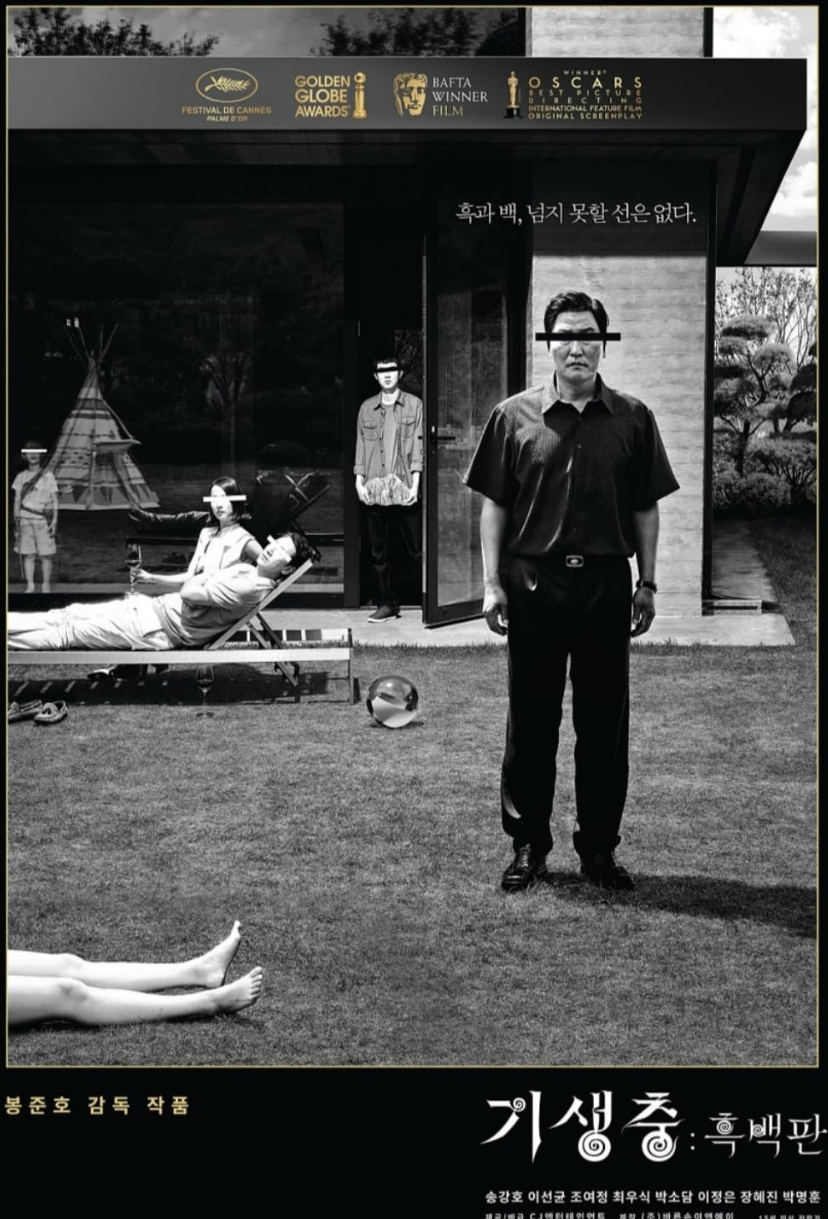
Photo: IMDB
Parasite - Through the life of the Kim’s and the Park’s
Parasite (2019) is a dark comedic thriller that follows two families from opposite ends of the social spectrum in South Korea. The Kim family, who live in poverty in a basement, collide with the Park family, a wealthy family residing in a rich neighborhood in Seoul. Throughout a sequence of clever schemes, the Kim family manages to infiltrate the Park family household by working as a tutor, an art therapist, a chauffeur and a housekeeper.
What might seem as a successful plan at the beginning quickly turns into chaos and tragedy when a dark secret from the Park family is discovered by the Kims.
Parasite explores themes of class inequality, social mobility and the invisible barriers between rich and poor, showing what happens if desperation collides with privilege.
This article will elaborate on the authenticity of the representation of the Korean social classes and differences.
Kim vs. Park: A Representation Of Different Class Structures
The film never explicitly states that the Kim family belong to the poorer social class and the Park’s to the rich one. Instead, the director Bong Joon-Ho makes the viewer feel the difference through cinematic and artistic choices, which create the story.
In one of the early scenes in the movie, the Kim family is folding pizza boxes in a cramped basement - which is later revealed to be their home - for a living. Their Wi-Fi is being borrowed by their neighbors, which often leads to poor connection. In the meantime, the Park family lives in a spacious mansion with a private garden. Through different cuts, Bong shows the parallelism and the differences between the families.
The first introducing scenes establish and reflect their social statutes, which is an authentic representation of the social split between rich and poor in South Korea.
From Cramped Basements To Spacious Mansions: A Reflection Of Wealth Through Space
The living environments reflect inequality. In many Korean cities, wealth correlates with elevation and sunlight. Homes on higher grounds are perceived as more attractive for a living because of the better views, more sunlight and less street noises. Meanwhile lower areas, like the basement the Kim family lives in (kor.:반지하/ banjiha) are cheaper because they get little natural light, are more prone to flooding and sit close to the street level.
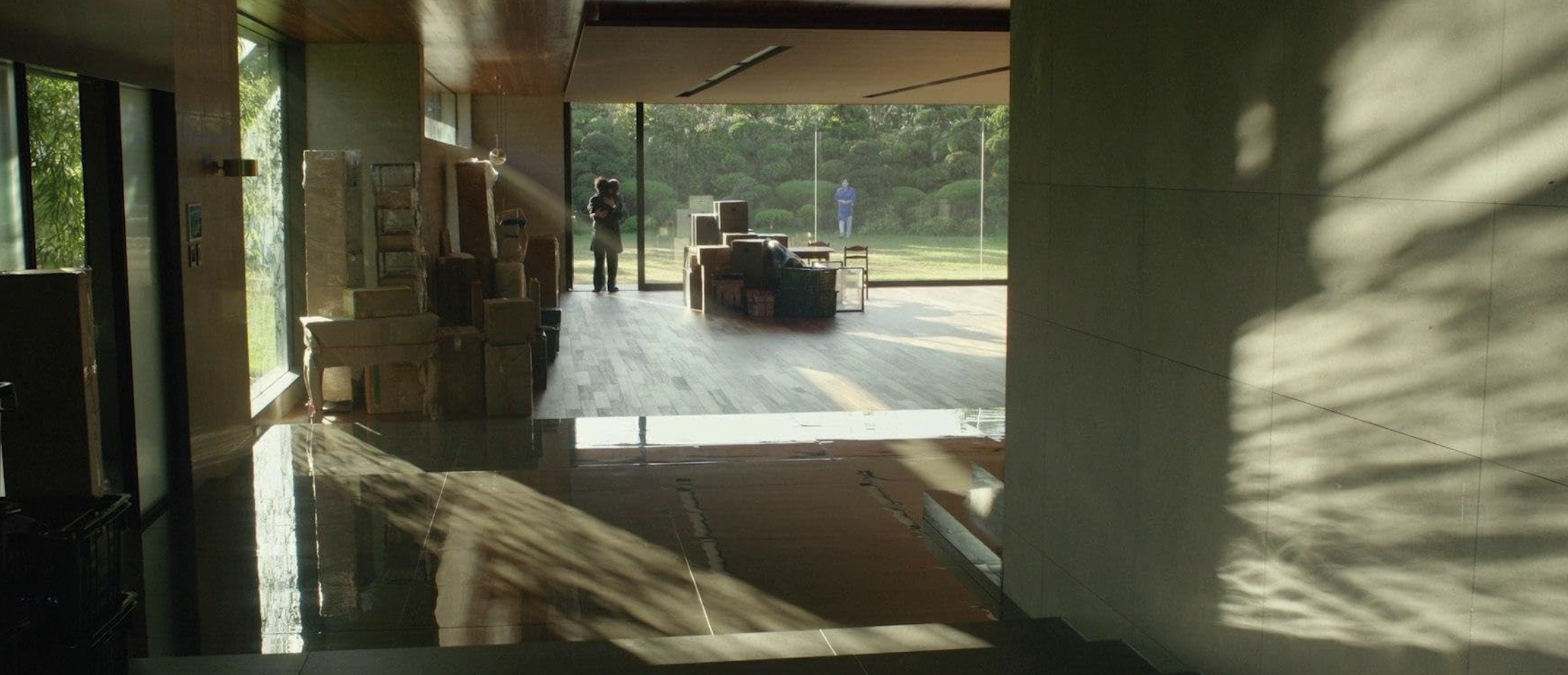
Photo: IMDB
The director uses physical space to emphasize the different social class structures. While the Kim’s live in a cramped, dark basement, the Park’s reside in a broad and light mansion uphill. The viewer perceives the dynamic of poverty against wealth by literally seeing the Kim’s descending to their apartment and the Park’s ascending.
Sunlight and Flooding
Bong plays with the element of natural light. Wealthier homes have large windows with an open layout, which allows the sun to shine in the living spaces. Poorer homes however, have small windows often at ground levels. In the movie, the window of the Kim family is at the street level. People are being seen urinating close by and bugs crawl in, while the Park’s home is flooded with clean and open daylight through their big window.
The sunlight symbolizes comfort, health and dignity.
The uphill mansion of the park does not only give the better sunlight, it is also the safer home. Lower-lying homes are much more vulnerable to flooding, which has been an issue during the heavy rains in Seoul.
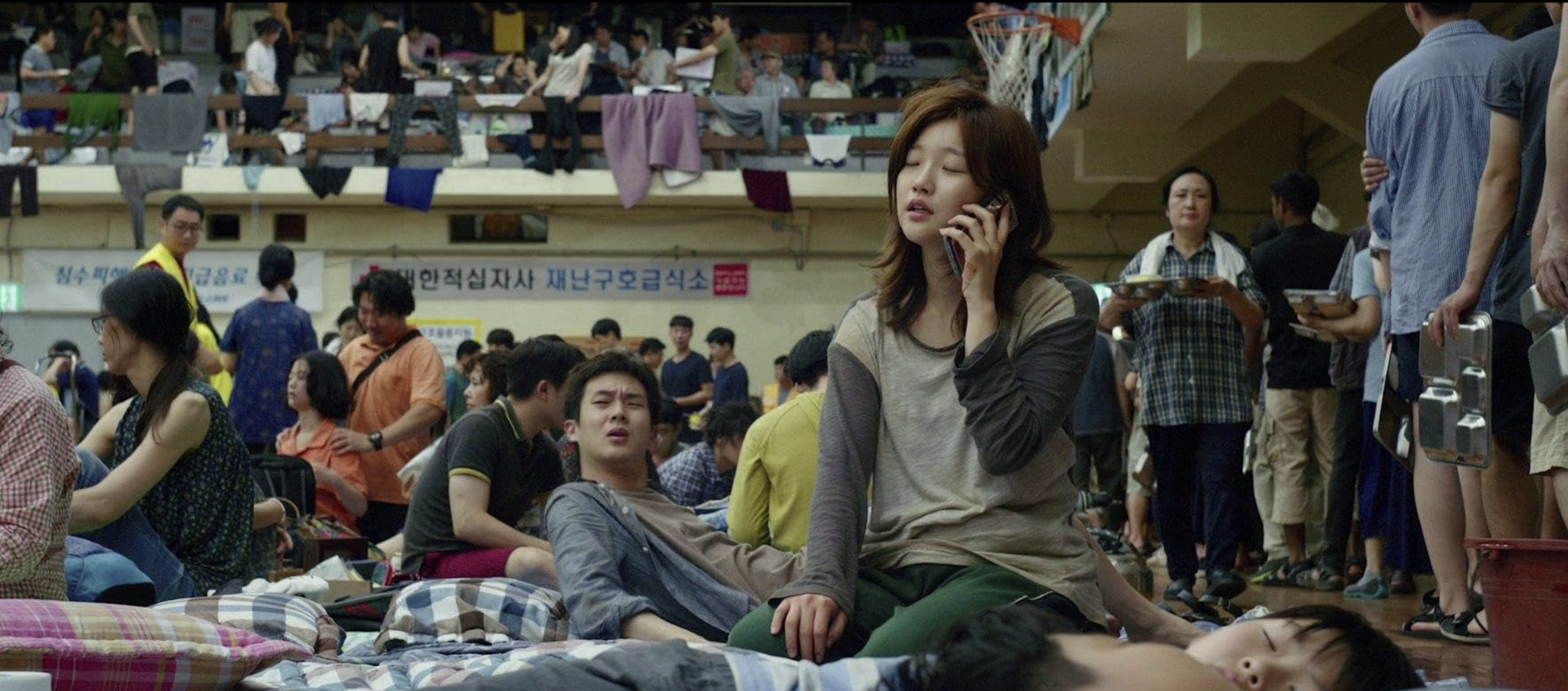
Photo: IMDB
During the rain sequence in Parasite, this conflict is being shown: while the Park’s enjoy the rain though the Window, the Kim’s basement is being flooded, destroying everything in their home. This leads to them having to sleep in an open gym with all the other people affected by the rain.
Different Social Behaviour
The characters are being seen to act accordingly to social norms. While the Kim’s use politeness to manipulate their way through life - reflecting their pressure to survive - the Park’s show casual entitlement. The movie showcases that people’s behavior is deeply rooted in Korean workplaces and class etiquette. Characters in the movie behave how the society behaves in the real cultural world. The movie does serve stereotypes of the social class structures in South Korea.
Authenticity in Parasite
Parasite feels authentic because it presents class inequality as a lived reality rather than a dramatized concept. Director Bong reinforces the authenticity through cramped semi - basement, unstable work and social hierarchies. The details in architecture, language and behavior reflect real aspects of the South Korean society.