Formula One : Between carbon footprint and legacy
Feature - Éliott Barnoud
Taking a closer look at the “pinnacle of motorsport” (as they say) shows how the sport has changed over the years to prepare for the future, tackling emission and representation issues.
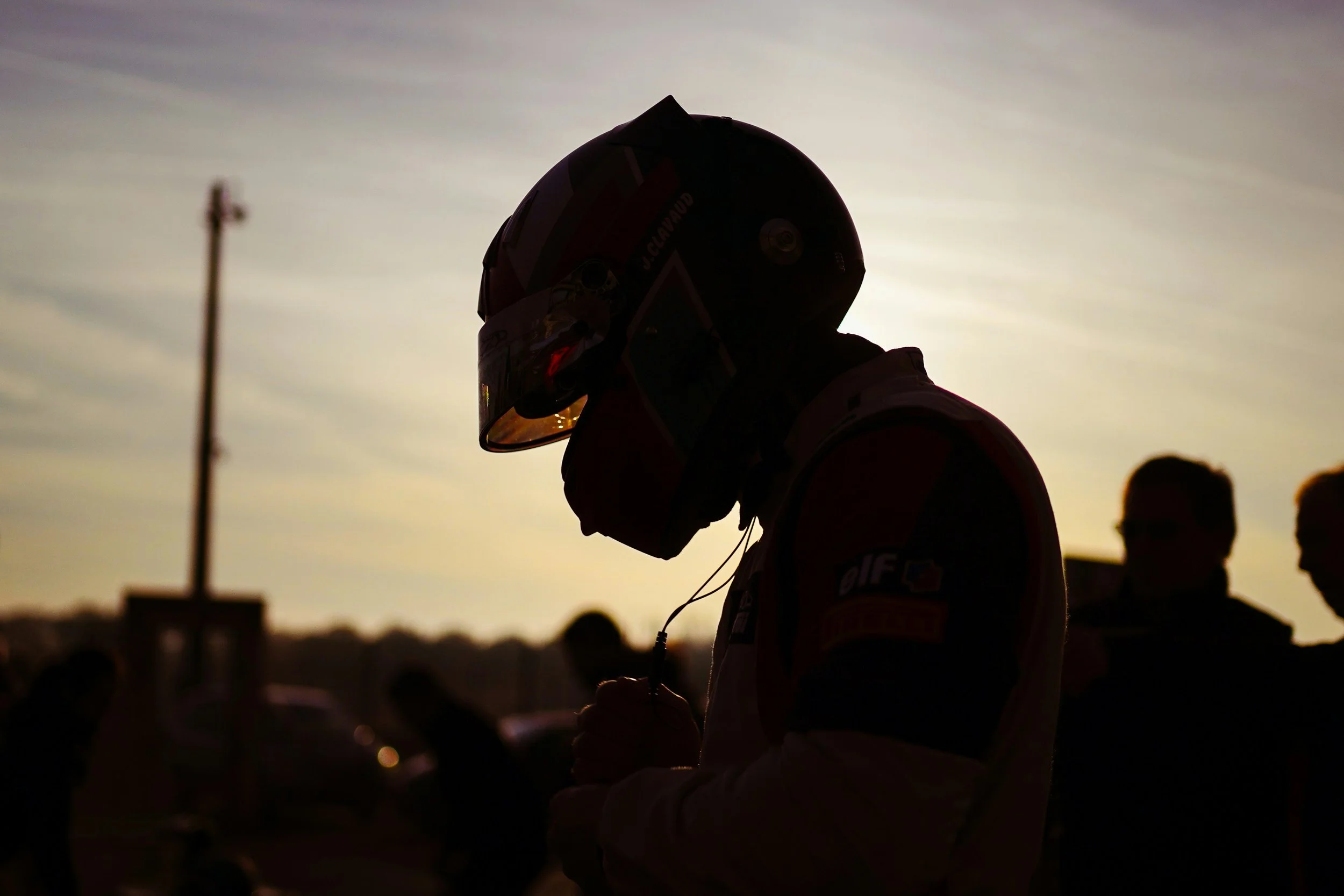
Photo: Unsplash / Mathias Dargnat
Ecology and carbon neutrality
How does one conjugate being a fan of Formula One and concerns about global warming?
No matter how fun, watching 22 cars race at high speeds for hours around tracks scattered across continents can’t be good for the planet, right? In recent years, voices criticizing the carbon footprint around F1 have been getting louder and harder for the sport to ignore. The Just Stop Oil incident at Silverstone circuit showcases how far protesters are willing to go (sitting on the track while cars race around them) to demand lasting changes.
This climate anxiety is shared by some drivers as well, such as Sebastian Vettel, who has been very vocal and active in pushing the regulations towards sustainability with his “Race without Trace” project, and protection of wildlife around circuits. Surprisingly enough, reports from the 2019 season state that, out of the 256,000 tons of CO2 emissions produced that year, only 0,7% came from the cars racing, while 45% were caused by logistics.
Formula One is trying to answer these fears by implementing a carbon neutrality plan by 2030. This plan includes a ban on single-use plastics around all the Grand Prix tracks and an emphasis on recycling, as well as a switch to 100% sustainable fuel in the cars from this season (2026) onwards. This fuel is developed by Aramco and has been used previously in the Formula 2 and Formula 3 series, and is promising for the automobile future as it is designed to replace previous fuel without any engine alterations necessary. This new season is also relying much more heavily on the electric components of the cars, with an increase from 20% to 50% of electrical battery reliance. This has prompted the fan community to joke about the sport inching closer to Formula E (the 100% electrically powered little sister of F1), and drivers, like Max Verstappen, joking about the similarities to video game racing.
«I swapped the simulator for my Nintendo Switch. I’m practising with Mario Kart”»
New rules for new eras
How much has F1 actually changed over the years? As the new season just started, the new regulations have been at the center of every discussion around race weekends. Hate it or love it, we are entering a new era of the sport.
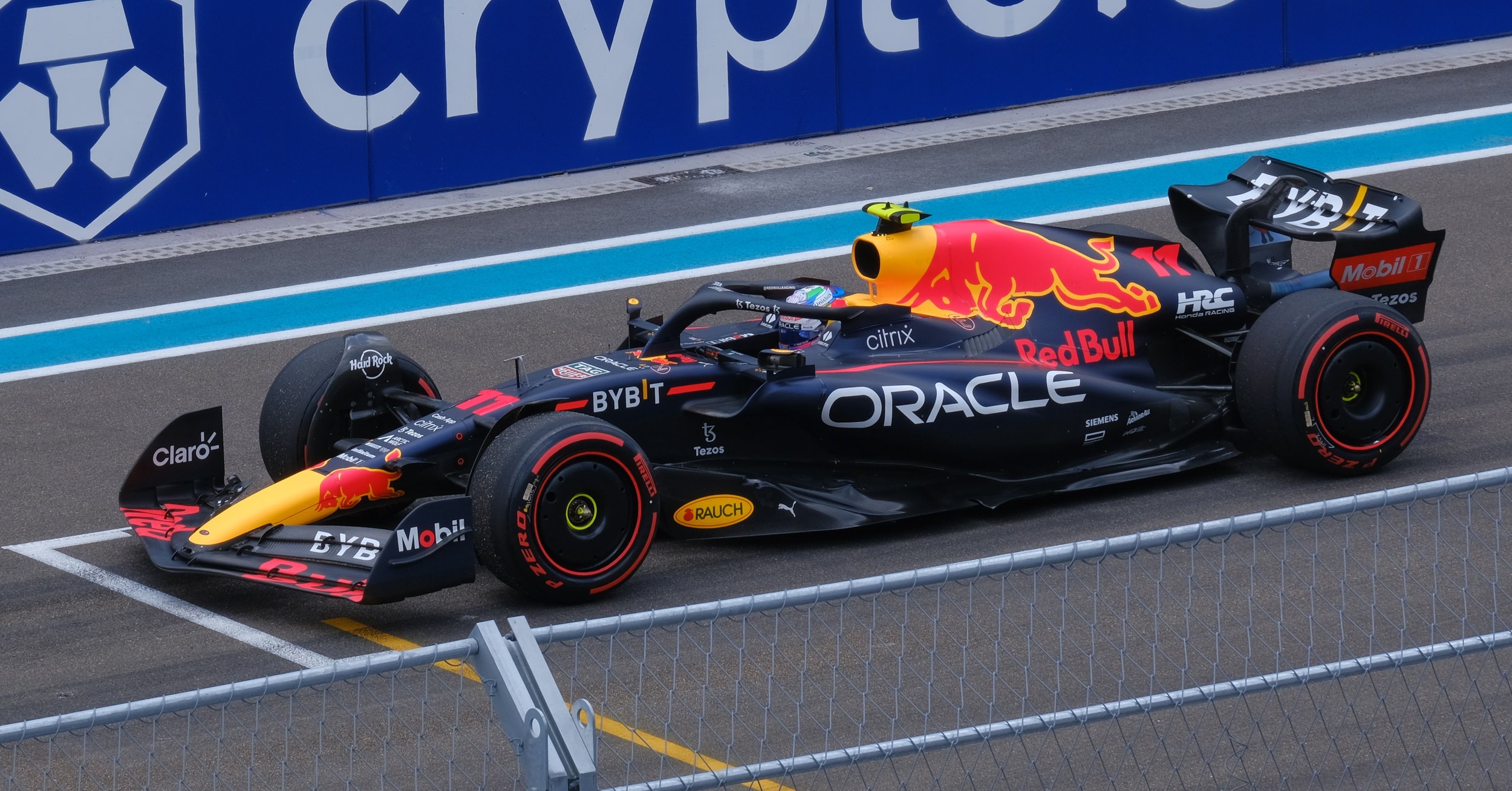
Sergio Perez in the Oracle Red Bull Racing RB18 during the 2022 Miami Grand Prix. Photo: Dcmaradiaga - Wikimedia commons, CC BY-SA 4.0
In 1950, during the first world championship season, the cars used front V8 engines. They then switched to middle V12 and V10 engines, before entering a new era in 2014 with V6 engines and hybrid power units. Then, from 2022 until 2025, another era emerged, led by big design changes relating to aerodynamics, which made cars get bigger than ever before.

Kimi Antonelli at the 2026 Australian Grand Prix. Photo: Yu Chu Chin - Wikimedia commons, CC BY-SA 4.0
After countless rules changes in its 76 years of existence, from qualifying format, point attribution, cost caps, mandatory tire changes or refueling ban, the implementation of the “halo”, and the new “sprint race” format, Constructors and drivers alike are struggling to adapt. Over the first two race weekends of this 2026 season (including two races and one sprint race), 9 drivers Did Not Finish a race, and 6 Did Not Start. These numbers are surprising, even with the addition of one new team to the grid, as the 2025 season only counted 6 DNF, 1 DNS, and 3 disqualifications over the same weekends (despite having 6 rookies on the grid).
These new cars are also shaking the previously established dominances building up since 2022. Red Bull Racing and McLaren are stuck in the midfield, while Mercedes and Ferrari are back up at the top. And while Williams and Aston Martin are failing to meet their expectations, Cadillac and Audi (recent additions to the paddock) are just getting started…
CLOSED MARKET?
Is Formula 1 a European, American or global sport? I, as a European, find that question particularly hard to answer. Historically, Formula One has always been fundamentally European. Out of the 7 races of its first season, six were in Europe, and only one took place in the USA (the famous Indianapolis 500). The 76th season has 24 races on the calendar, with 9 taking place across Europe, 6 in the Americas, 5 in Asia-Oceania, and 4 in the Middle East.

The famous hairpin turn of the Monaco Grand Prix. Photo: Filipp Romanovski / Unsplash.
This drastic shift is showing precisely the tension rising regarding the sports legacy. European races are getting fewer and fewer as time passes (Zandvoort leaves the calendar in 2027 and Spa will alternate from 2027 onwards), Asian countries such as Vietnam and Thailand have been trying to join the competition, all the while the USA (a single country) is disproportionately represented with 3 different races taking place there throughout the season. The Middle Eastern region has also become increasingly important for Formula One, hosting the Bahrain pre-season testing, as well as the final race of the year.
This is caused by Liberty Media, the F1 brand owner group and diffusion rights holder, and Mohammed Ben Sulayem, FIA’s infamous president. These leaders have pushed F1 towards new markets, sustainability, and financial growth. Europe’s influence is also set to decrease as the African market is looking to join the calendar in the near future. Nigeria and Rwanda are often named as potential contenders to the historic Moroccan and South African Grand Prix, which could return following some track improvements after more than 68 and 33 years, respectively.
As remarked by reddit user “AgroMachine” when they ask: “Why is it that everyone’s British?”, there is a major British presence in F1. From the team principals and drivers (6 in both categories on the grid in 2026), to the majority of the crews (media, mechanical, and engineering) and the headquarters of most of the teams being in the UK. The French are also strongly represented both in the sport’s terminology (grand prix, parc fermé, fédération internationale de l’automobile…), team principals, and drivers (respectively 2 and 4).
New Blood
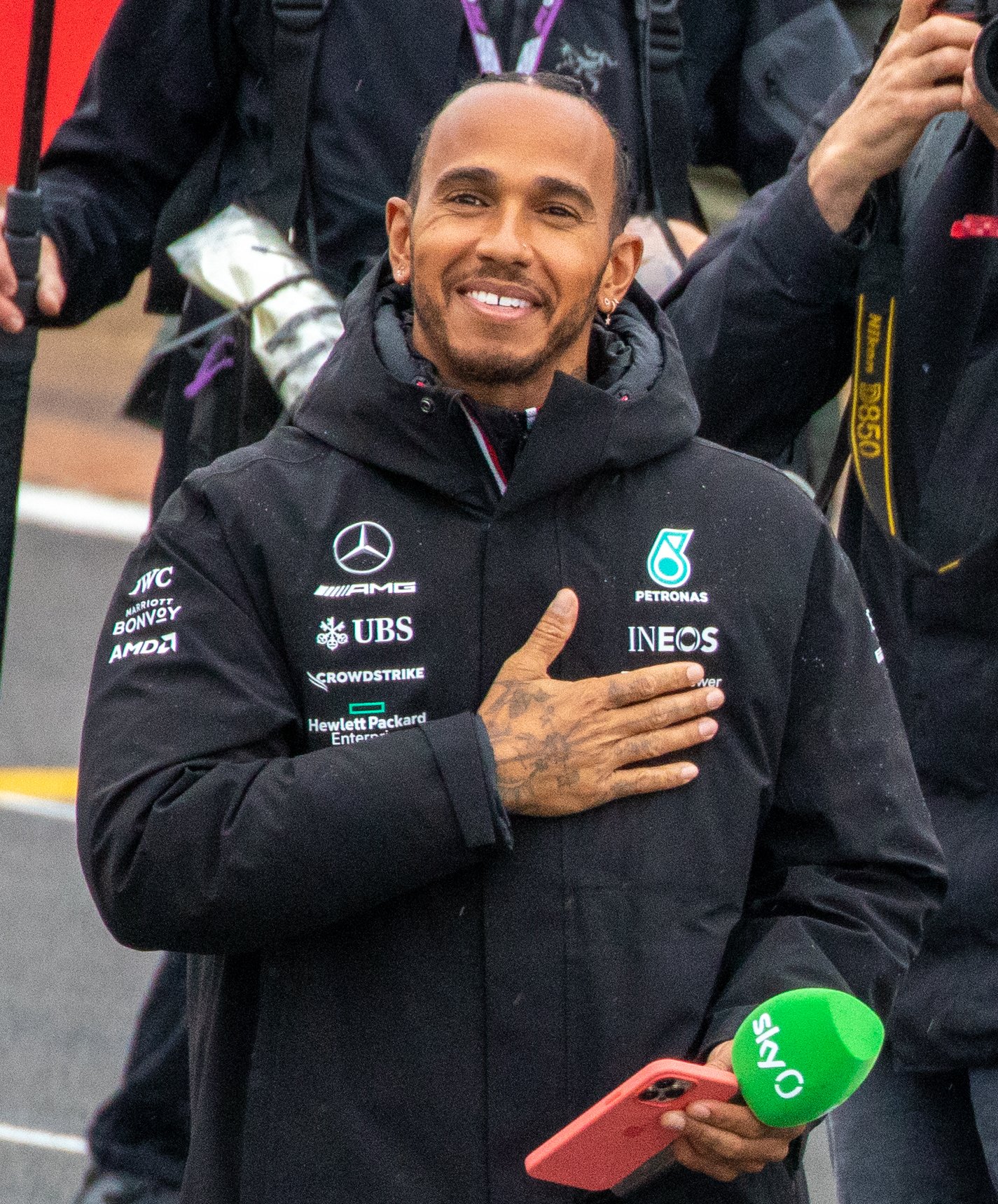
Lewis Hamilton has been in Formula 1 since 2007. Photo: Jen Ross - Wikimedia Commons, CC BY 2.0
Many non-European drivers relate their difficulties with joining Formula One and having to move away from home at a young age, as the process is still heavily centered around European single-seater series. There is not one way to get into F1; one might think the progression is logical, as there are series named Formula 4, Formula 3, and Formula 2. And while it is possible to progress in this order up to Formula 1, it is also possible to skip some series, partake in Super Formula, regional Formula 4 and 3 championships, or jump from other racing disciplines into F1 and vice versa.
These variables make it extremely difficult to keep track of every prospective driver trying to reach the top step of motorsport. In this year’s “official” feeder series, 28 different nationalities are represented among 56 drivers, compared to only 41 nationalities in all of Formula One’s history. The F1 grid only has 22 spots, and these fill up fast, especially knowing some drivers are hired because of their sponsors or connections and some try to stay in their seats as long as possible.
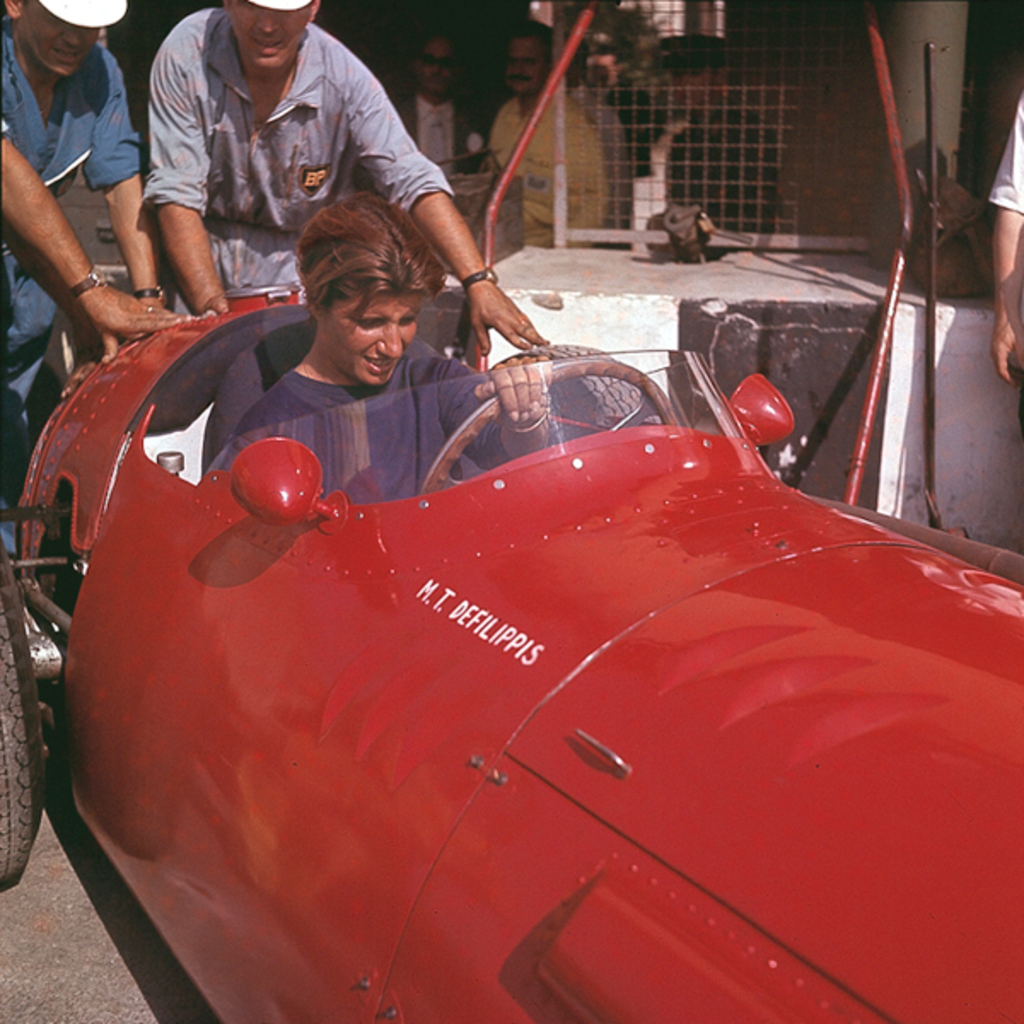
Maria Teresa de Filippis, at the Italian Grand Prix in 1958. She was the first woman to race in formula one. Photo: Alan R. Smith, Public Domain
With such an exclusive club, it is legitimate to wonder if there is space for more diverse drivers on the grid. There are no drivers with an African nationality in the main championships, Lewis Hamilton remains Formula One’s only black pilot, and there have been only 5 women taking part in Grands Prix over the last 76 years.
F1’s sexist history is not that far away. Grid girls only disappeared in 2018, and some drivers have made sexist comments about the lack of gendered representation in recent years. But change is on the way, as Hannah Schmitz, Laura Müller, and Claire Williams have demonstrated in the past seasons, holding roles such as lead strategy engineer, race engineer, or team principal.
F1 Academy is also a new addition to this movement, aiming for more women to join the sport and gain visibility as racing drivers. This all-female championship, directed by Susie Wolff, has even been turned into a documentary akin to “Drive to Survive” by Netflix. This phenomenon is reflected by the sport’s audience, jumping from 20% to over 40% female viewership over a couple of years. The fanbase is growing and expanding beyond its past boundaries. The sport is launching toy lines with Lego and Hot Wheels, a partnership with Disney, and even venturing into cinema with the Oscar-winning “F1” movie.
The “pinnacle of motorsport” knows how to stay relevant and reinvent itself. It has a long and respected legacy already, and seems intent on ensuring a sustainable and respectable future for itself. Only time will tell how long this can last, and what direction this track will lead to…