Improv in the online space
Article — Stine Ellegård
Improv has garnered quite the name for itself, for bad and good. Improvisers have often been looked down upon as lame and annoying, but in recent times they have gathered quite the popularity in the online space. Theatres and comedy clubs might struggle to get new audiences, but the art of improv is not going any time soon.

Photo: Tim Mossholder
Brief history of improv
Improv is a form of unscripted performance, based on loose scenarios, where everything is made up on the spot. It’s usually quite interactive as they often take words and phrases from the audience to base scenarios on. When the performance scenes only take a few minutes, it is referred to as shortform, while longform is drawn out in longer scenes.
While improvised performances have existed for centuries, modern improv has evolved from around the 1950’s. The Compass was a storefront theatre near campus of the university of Chicago and has been named the birthplace of improv. Viola Spolin is known as the “mother of improvisation” and many of today’s techniques and games used by improvisers can be traced back to her. Paul Sills who helped found the Compass would take Spolin’s theatre games to train improvisers and that would be what formed the Compass stage method.
Del Close would be known as the originator of the well-known improv structure called “the Harold”. It starts with an opening that help explore the coming performance themes. The opening is followed by three scenes that base themselves on the theme found in the opening. These scenes are known as first beat. The first beat is followed by the second beat where they will continue to explore the theme in different ways through the use of fun group games. In the third beat they continue and at that point scenes from different beats and this one should start connecting with each other.
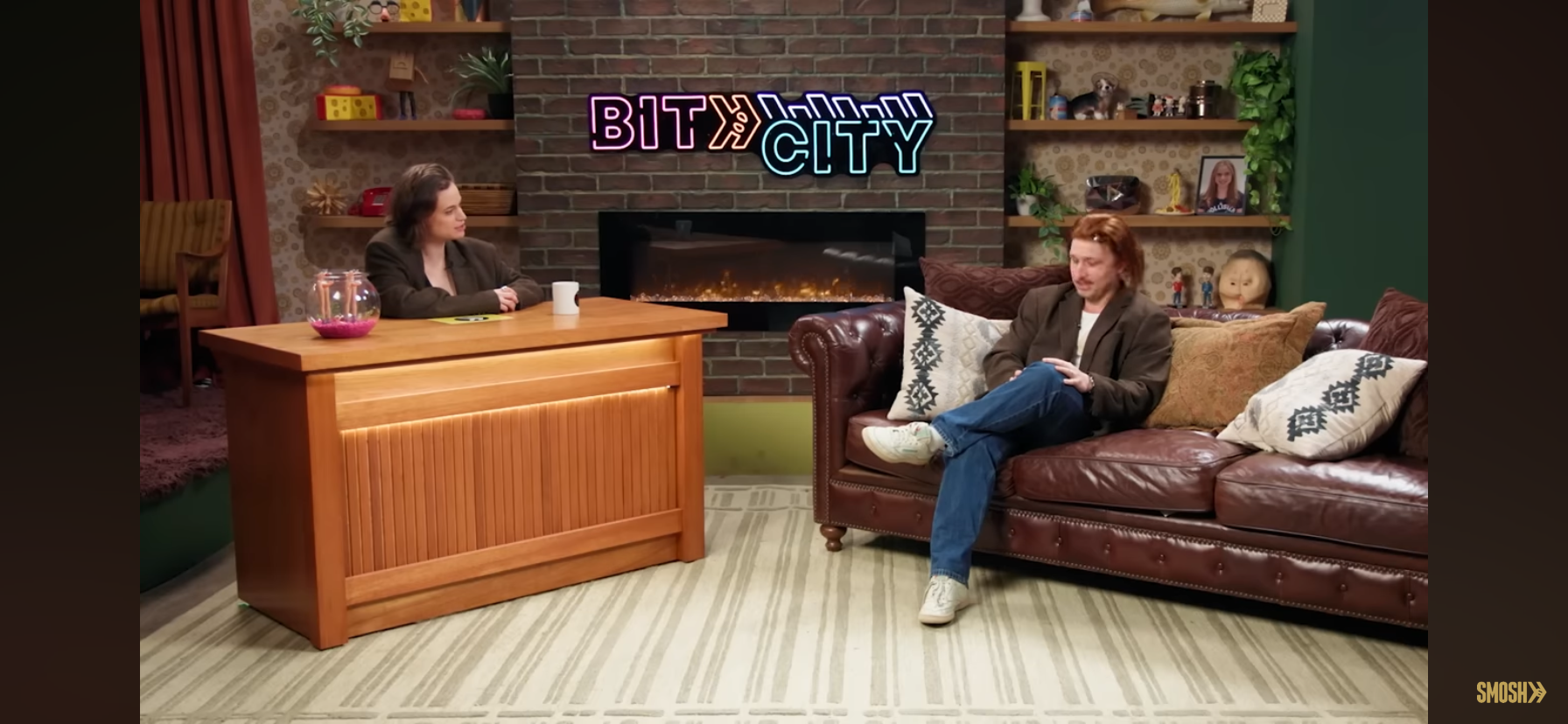
Angela Giarratana and Shane Topp on Bit City. Screenshot: Stine Ellegård / PRESSET. From YouTube
Smosh
Smosh is a YouTube channel started in 2005 by Ian Hecox and Anthony Padilla. Today the have over 52 million subscribers across five channels. They have multiple different formats from gaming content, sketch comedy, board games, semi-scripted improvisation, full improvisation and more. The channel has primarily done sketch comedy in its earlier years, but the past few years they have branched out into different forms of comedy. They have also gathered multiple actors and comedians to fill out the cast and they have guests on from the online comedy space.
Semi-scripted content
Semi-scripted refers to content that to different degrees is not fully planed out. This could be either that some of the dialogue has been written out or that there are some key jokes that have been preplanned. Smosh has made multiple series of videos that have this format.
Bit City is a current series running on the main channel. It features recurring segments and characters. The show is scripted, but with room for improvisation. It’s quite reminiscent of Saturday Nights Live, but not live, less formal and with more improv. Fully scripted sketches also happen within the series. Most of the segments within the show are short-form, but some might lean more longform.
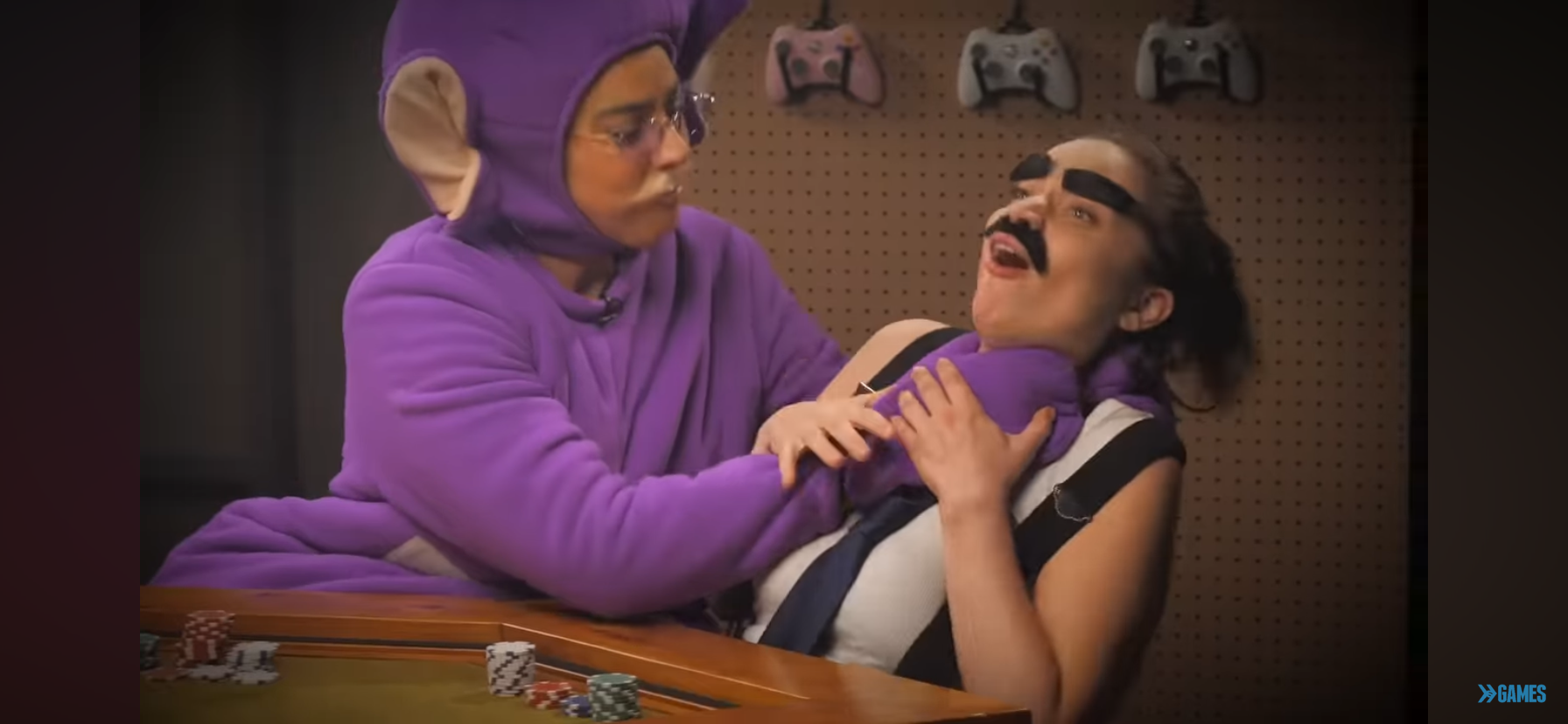
Amanda Lehan-Canto as Tinky-Winky and Angela Giarratana as Detective Where’s My Coffee on Smosh Games. Screenshot: Stine Ellegård / PRESSET. From YouTube
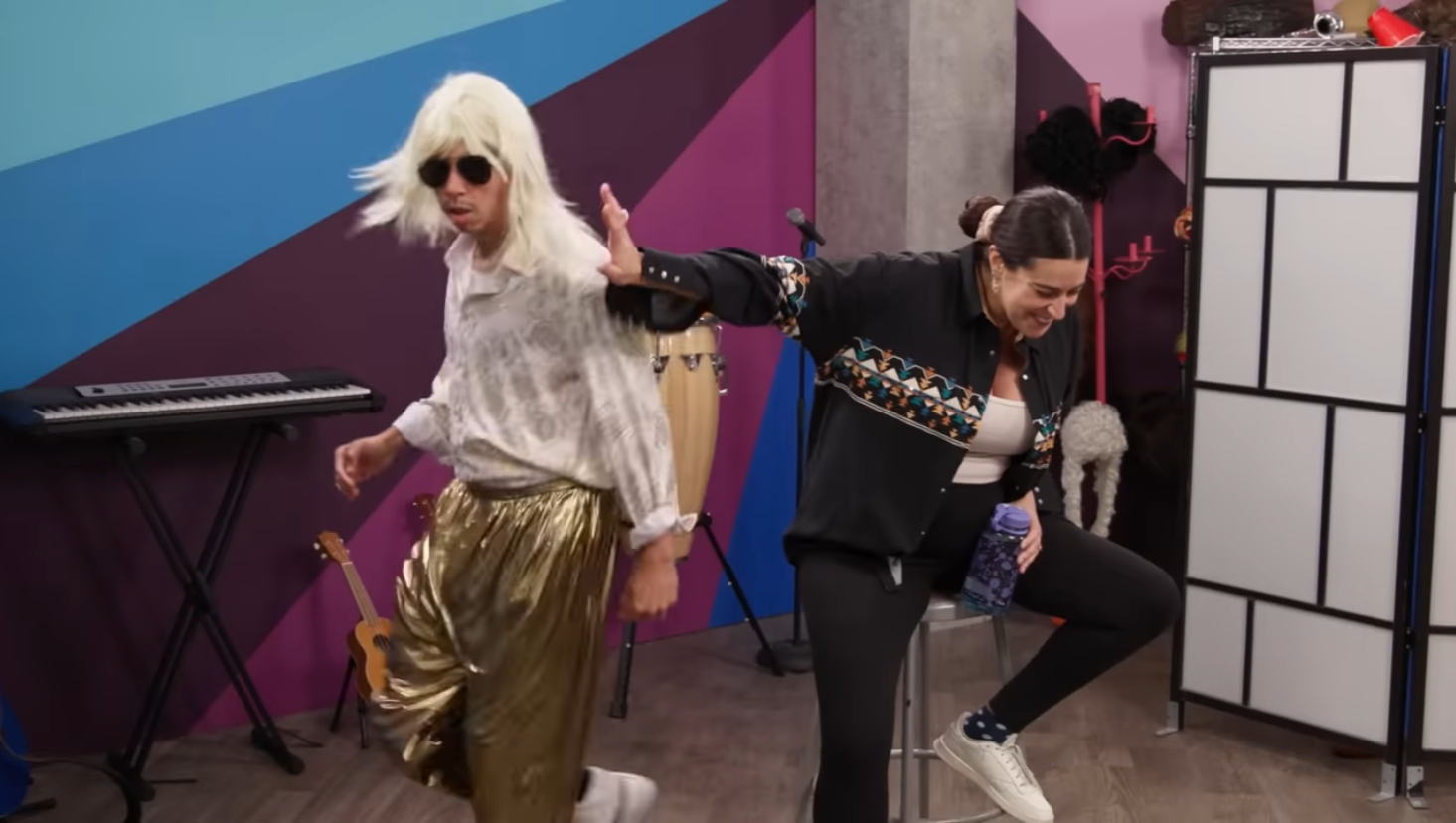
Chanse McCrary and Amanda Lehan-Canto on Try Not To Laugh. Screenshot: Stine Ellegård / PRESSET. From YouTube
Unscripted content
They currently have two main forms of unscripted comedy content: one on the games channel, and one on the pit channel. Both of those are side channels made after the creation of the original main channel. On the games channel they usually have informal videos where they either play video games or board games. They switch between just playing as themselves or as characters that are usually made up on the spot. On the Pit channel They do challenge videos where they usually are just themselves. One of the challenges they do is called try not to laugh, where someone sits on the stool and the others take turns trying to make the person on the stool laugh. The cast of Smosh will usually make up characters and jokes on the spot to make each other laugh. This is what you call shortform within the improv space.
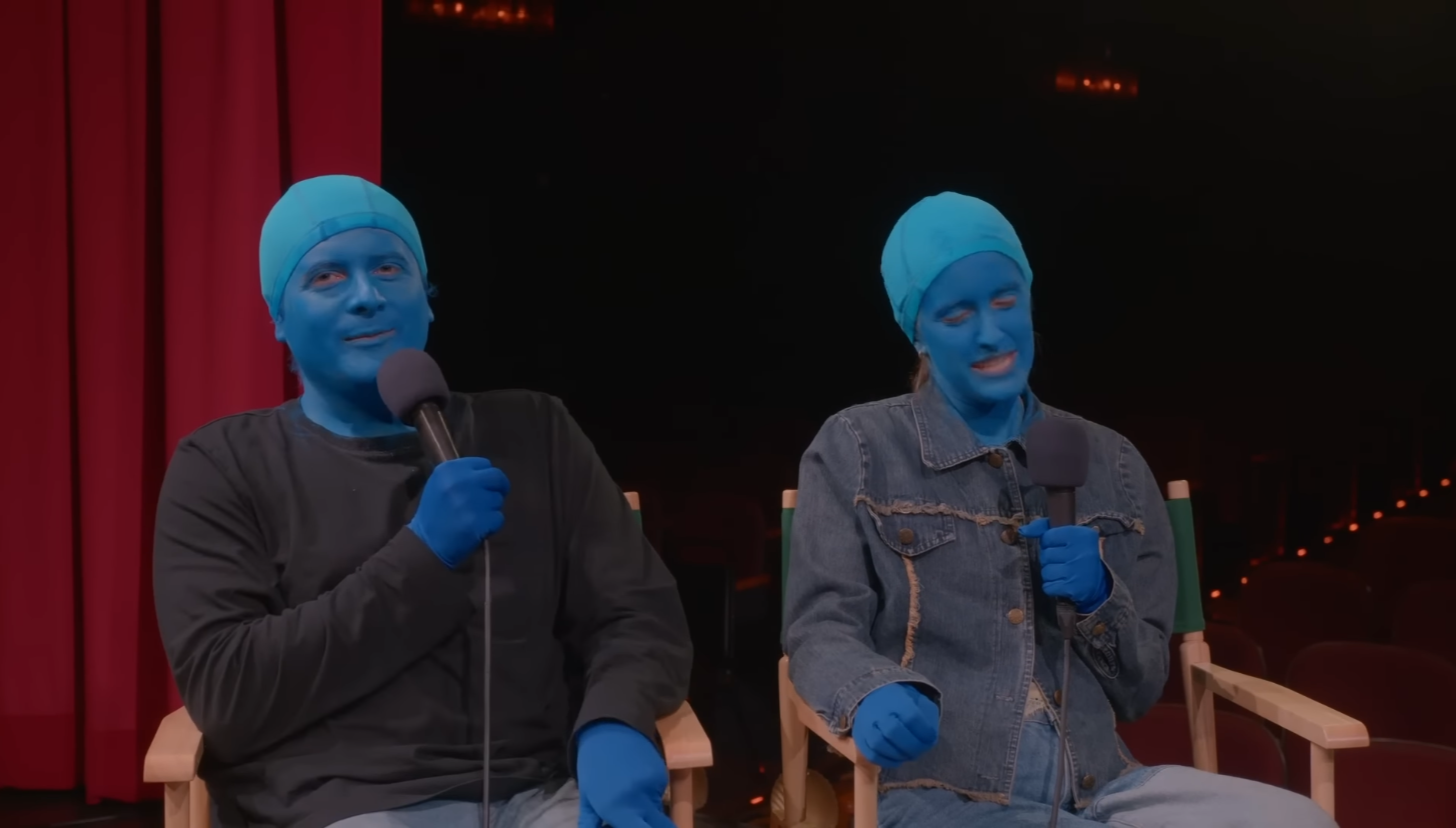
Jeremy Culhane and Kylie Brakeman pretending to be members of the Blue Man Group. Screenshot: Stine Ellegård / PRESSET. From YouTube
Artist on Artist on Artist on Artist
Artist on Artist on Artist on Artist is a podcast created by Kylie Brakeman, Jeremy Culhane, Angela Giarratana and Patrick McDonald. It was created in 2021 and currently has 200 episodes. It’s a fully improvised podcast, where they have a theme related to Hollywood for each episode. The episodes are around 45 minutes to an hour. They also feature guests on the podcast, often people within the online comedy space. Alongside having the audio version available on most podcast platforms, the visuals are available on YouTube.
With the long videos where the work with the same character around the same scenario you would classify this as longform. Even though the goal with improv often is to not break character, this is still an unformal podcast where they are well-known to break into laughter as they talk about bizarre scenarios, something that usually makes it even funnier.
Dropout
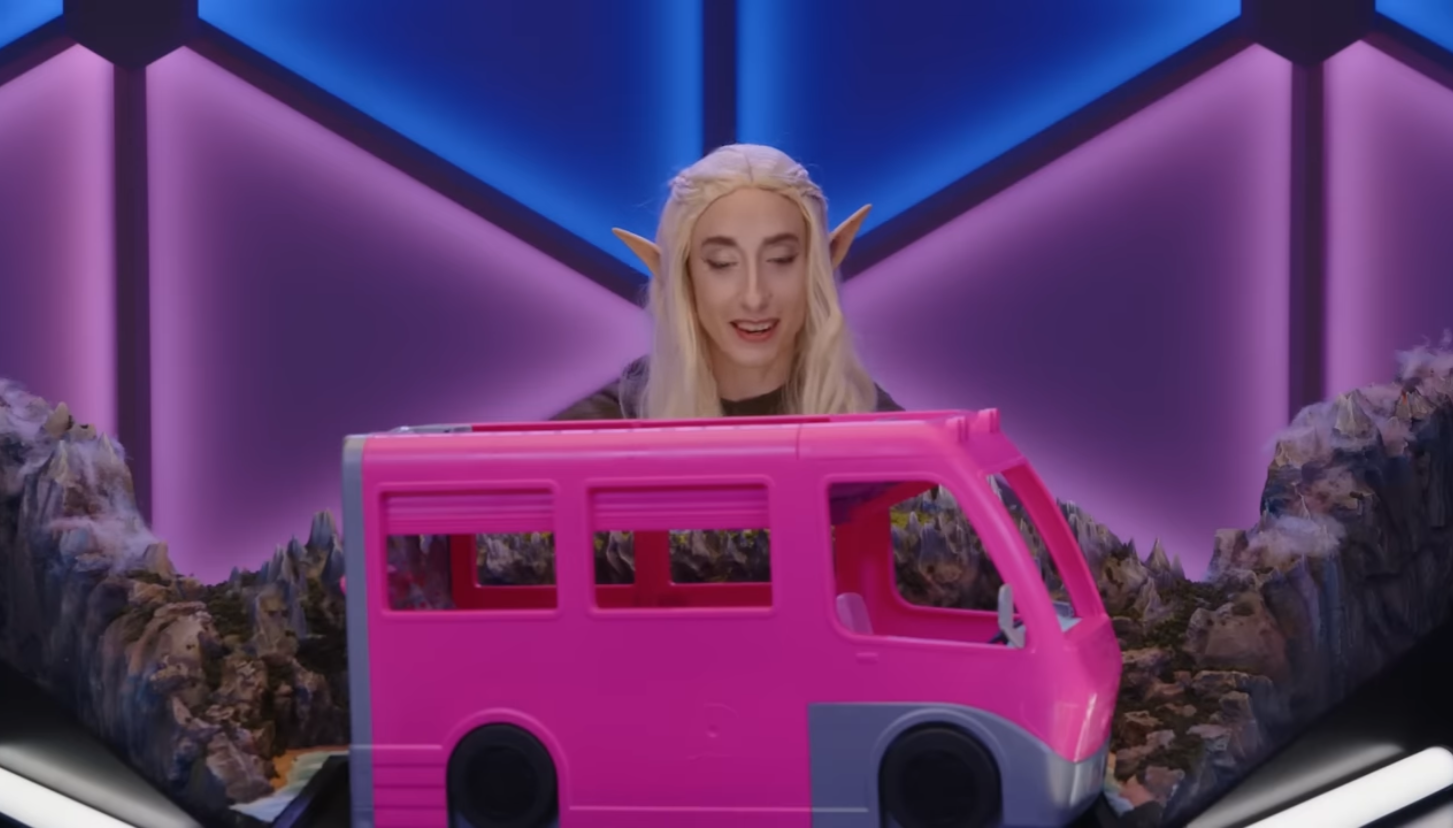
Katie Marovitch on Dimension 20. Screenshot: Stine Ellegård / PRESSET. From YouTube
Dropout is a subscription video platform that gives you unscripted comedy shows. Some of their most famous shows are Dimension 20, Game Changer, and Very Important People. They have a large cast and feature guest on multiple of the shows. The guests are often from the online comedy space. Dropout was formerly known as Collegehumor, a YouTube channel that posted comedy sketches. When the parent company fired everyone and sold the rights to Sam Reich, he started dropout which has grown ever since.
Dimension 20 is a tabletop roleplaying game, where every season they feature new characters and situations. The game is similar to D&D or other TTRPGs and is heavily based on improv and is funnier the better the people playing are at improv. Any tabletop roleplaying game is a form of longform improv.

Brennan Lee Mulligan, Isabella “Izzy“ Roland and Lou Wilson on Game Changer. Screenshot: Stine Ellegård / PRESSET. From YouTube
Game Changer
Game Changer is a gameshow where the host Sam Reich gives challenges to the participants. The participants have to complete the challenges on the spot. As they are quickly moving from challenge to challenge, you would call this shortform.
Very Important People
Very Important People almost have a talk show like quality. Host Vic Michaelis interviews a guest that has gotten an extreme makeover and has to make up a character on the spot. The episodes are around 20 minutes and would therefor be considered longform.
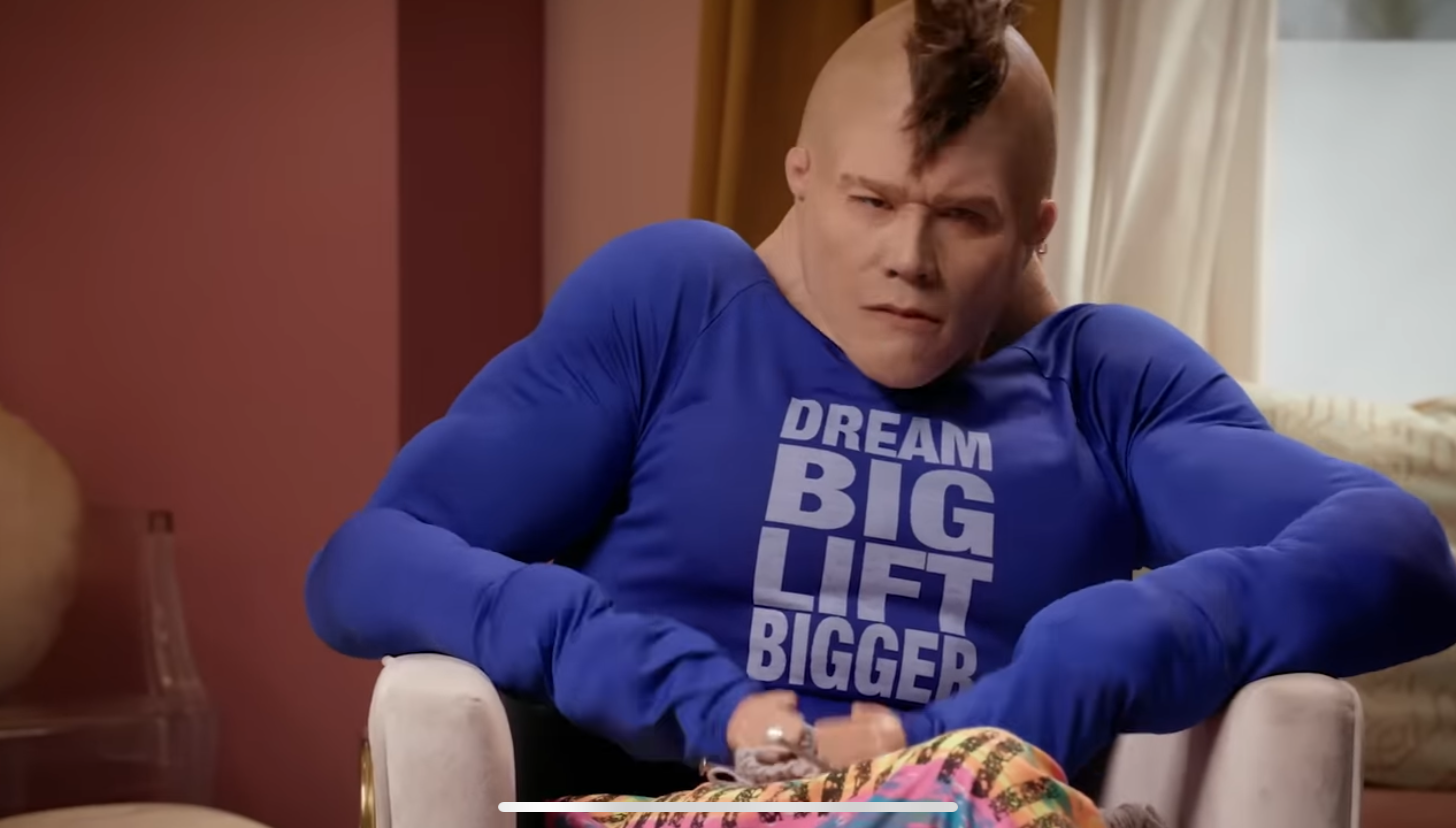
Zac Oyama on Very Important People. Screenshot: Stine Ellegård / PRESSET. From YouTube
The art of improv has existed for a very long time and is still in full play today. As every industry has to adapt to the age of technology Smosh, Artist on Artist on Artist on Artist and Dropout are taking improv into the modern day.